Getting how to handle resin waste disposal properly comes down to one rule: cure every drop of uncured resin before it goes anywhere near a bin, a drain or the ground. Liquid photopolymer resin has to be polymerised into a solid first, and that is what turns it from hazardous waste into something most household waste streams accept.
The whole workflow takes about an hour per batch of waste. It is not difficult, but it does require a container you can seal, somewhere with daylight or a UV lamp, and about fifteen minutes of reading your local waste rules before you start.
Four separate waste streams turn up here, and they are not treated the same way: uncured liquid resin, partially cured pieces, solvent or rinse water contaminated with resin, and fully cured solids. Get those straight and the rest is straightforward.
Table of Contents
- 1What You Need
- 2How to Handle Resin Waste Disposal Properly Step by Step
- 3How to Handle Resin Waste Disposal Properly at the Printer
- 4How to Handle Resin Waste Disposal Properly for Uncured Resin
- 5How to Handle Resin Waste Disposal Properly for Cured Resin
- 6What Goes Where: A Disposal Matrix
- 7Common Mistakes
- 8Frequently Asked Questions
- 9Can I pour uncured 3D printing resin down the drain?
- 10Can cured resin pieces go in the regular trash?
- 11How should I store liquid resin waste before disposal?
- 12What should I do if uncured resin spills on the workbench?
- 13Can I reuse alcohol wash waste or pour it into a separate container?
- 14Conclusion
What You Need
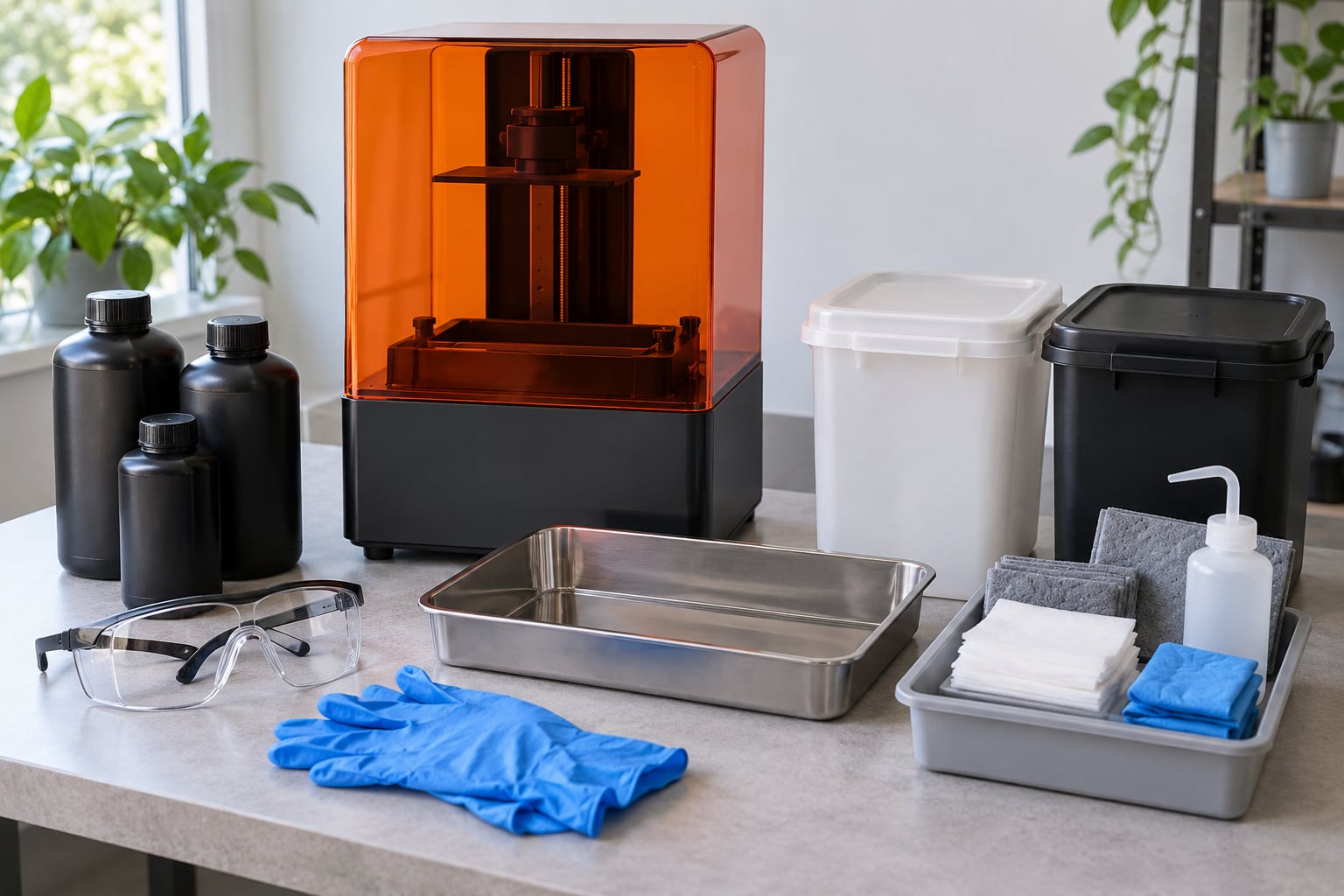
Gather all of this before the first bottle goes into the waste bin, because retrofitting PPE halfway through a spill is how people end up cleaning resin off their forearms with a paper towel and a bare hand.
- Nitrile gloves — the disposable powder-free kind, not reusable rubber or latex ones. Have two pairs so you can change between handling liquid and handling cured solids.
- Closed-toe shoes and goggles — splash goggles rather than glasses. Regular nitrile gloves keep liquid off skin but do nothing for the face.
- Ventilation — a window that opens, or an extractor fan over the wash station. Do not work with resin or solvent in a closed room you share with other people.
- Sealable containers — the original jug for the manufacturer take-back, plus a rigid lidded tub for anything you are storing. Cardboard cartons are not containers.
- A shallow curing tray or flat dish — something you can pour a thin layer of liquid resin into so light reaches it evenly. A deep cup cures solid at the top and liquid at the bottom, which defeats the whole point.
- Daylight or a 405 nm UV lamp — a sunny windowsill works. Check the resin’s instructions for the curing time they tested with your setup.
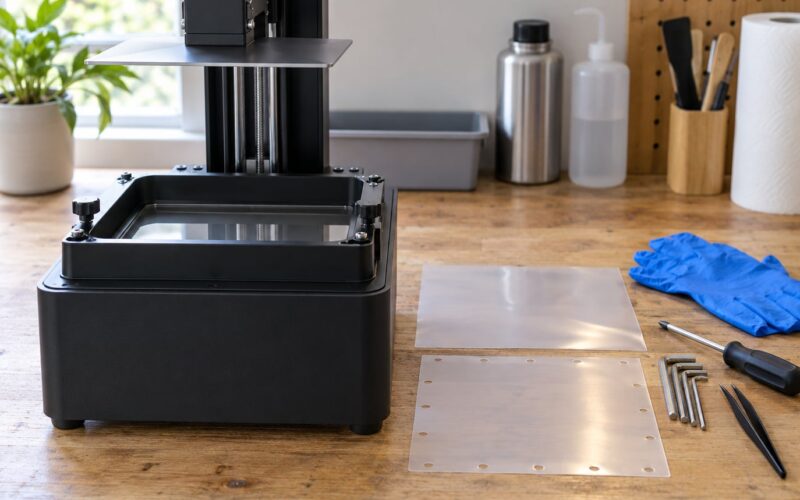
- Absorbent material — paper towels, cat litter or vermiculite for catching droplets, plus a plastic scraper for lifting cured sheets off a vat.
- Waterproof labels — tape that survives damp hands. Mark every container with its contents, the date and whether the resin is cured or uncured.
- The safety data sheet — every resin you own should have a downloadable SDS. Section 2 gives hazards, section 13 gives disposal codes, section 15 gives regulatory information.
- Your local waste guidance — a search of your council or county waste site plus your state or regional environment agency, before you need it rather than after.
How to Handle Resin Waste Disposal Properly Step by Step
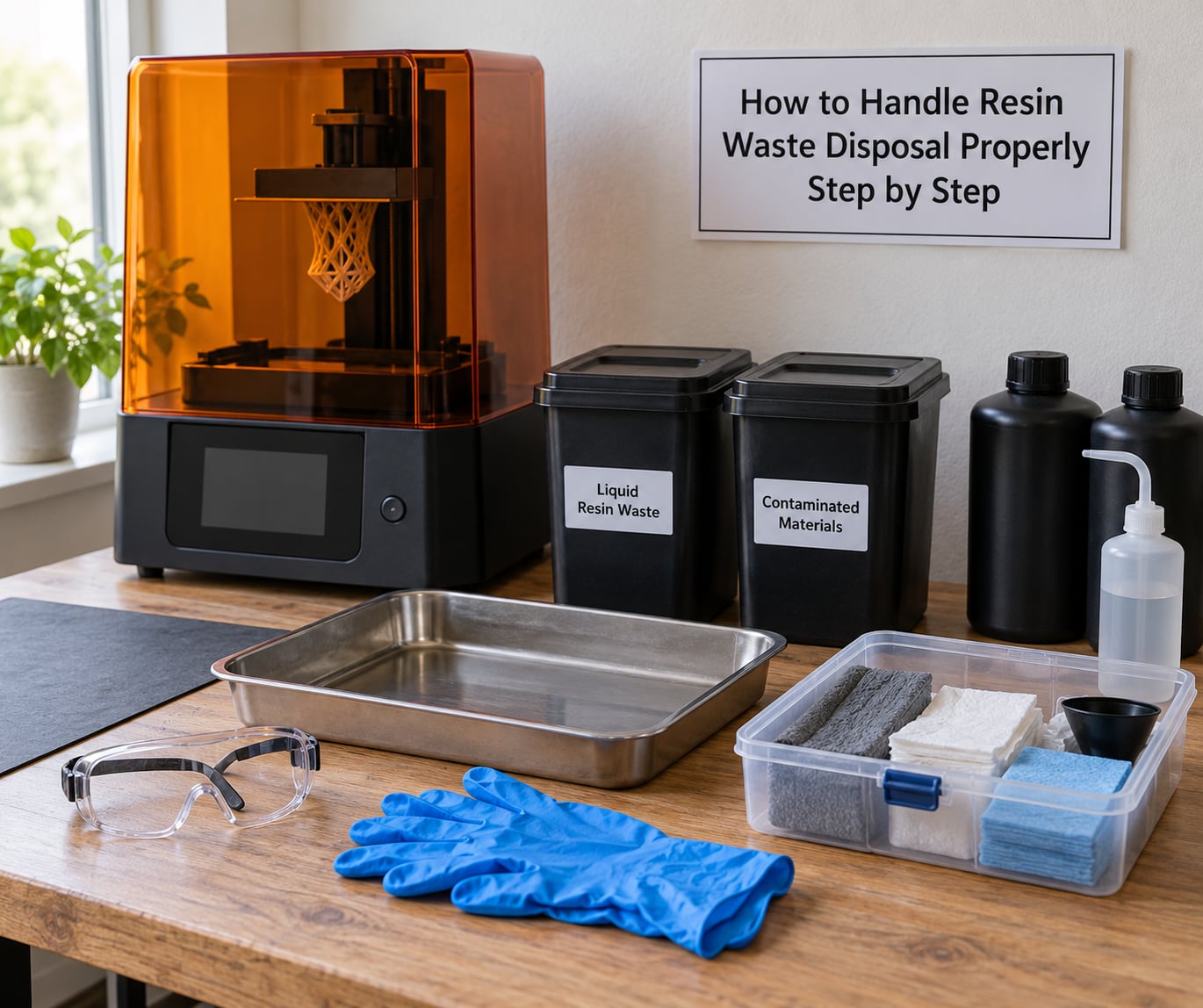
Six steps, in this order. The order matters because steps one and two stop the waste getting bigger, and step three is where you find out whether you are dealing with household waste or licensed hazardous waste.
1. Stop the source. Anything still sitting in a vat, a bottle or a wash station keeps producing waste. Move your workflow forward before you start clearing it.
2. Separate the streams. Sort what you have into uncured liquid, partially cured pieces, contaminated solvent or rinse water, and fully cured solids. Keep each one in its own labelled container. Mixing different resin chemistries or ages into one jug makes the whole batch harder to treat later.
3. Read the SDS and the local rules. Before anything moves, check what your resin manufacturer and your local waste authority actually require. Many regions classify liquid and partially cured photopolymer resin as hazardous waste regardless of what a forum post says. Some municipalities accept cured solids in household waste and nothing else.
4. Cure the liquid resin. Pour it into a thin layer in the curing tray and put it in direct sunlight or under the UV lamp for the full time your instructions specify. Sunlight works because it contains UV, but it is slower and depends on season and window glass. Rotate the tray halfway through so no corner stays liquid.
5. Handle the solvent and rinse water separately. Resin-contaminated isopropyl alcohol gets filtered and reused until it stops dissolving uncured resin cleanly, then it goes to a facility as solvent waste. Rinse water from water-washable resin is its own problem, and the honest answer is that no home treatment makes it safe for a drain.
6. Hand off what is left. Cured solids to household waste if your local rules allow it. Everything else to a licensed collection point or a household hazardous waste facility, containers closed and labelled.
How to Handle Resin Waste Disposal Properly at the Printer
Finish the print or stop it deliberately through the printer menu. Do not yank power mid-layer — a half-cured raft stuck to the platform is the messiest thing you can deal with, and you may end up scraping uncured liquid off the frame onto the floor.
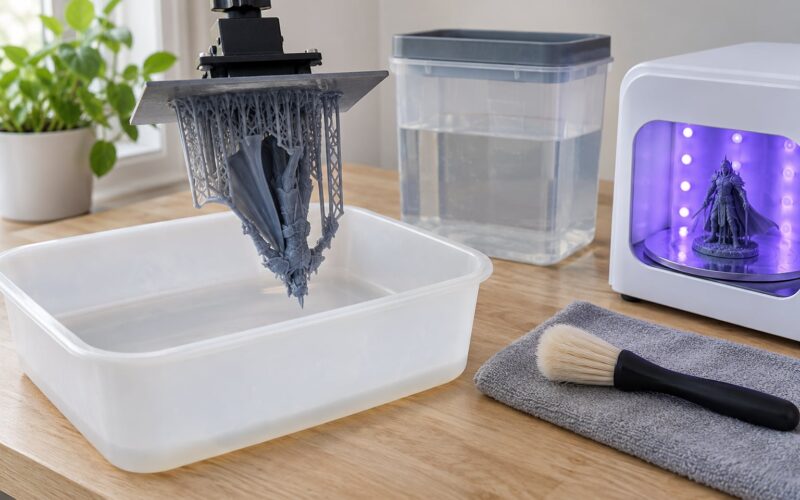
Lift the build platform, move it over your curing tray or a sheet of paper, and let drops fall onto the tray rather than the floor. Wipe the underside and the platform edge with a paper towel and add that towel to your uncured container.
Move waste containers one at a time, upright, with two hands. Do not set an uncured jug on the edge of the bench, and do not pour vat resin back into a part-used bottle — cured debris in the fresh bottle is a reliable way to lose a print.
How to Handle Resin Waste Disposal Properly for Uncured Resin
Uncured resin is the only stream with a genuine choice attached to it, so it deserves the most attention. You either cure it yourself or you pay someone who is licensed to.
To cure it yourself: pour the liquid into a shallow tray, give it a larger surface area than you think it needs, and cure it until the whole thing is solid and no longer sticky. Sunlight works and costs nothing; a UV lamp is faster and works on a winter afternoon. A widely shared maker build is a sealed metal bin with a 405 nm strip in the lid, which also keeps curious cats out — worth knowing if you have pets.
Test for a full cure by pressing the edge of the tray with a gloved finger. If it dents, feels tacky or smells strongly of monomer, it is not finished. Give it more time. Under-cured material going into a bin is the single most common mistake in this whole process.
To use a professional instead, ask your local waste authority or a private chemical waste collector whether they accept small quantities of photopolymer resin. Many will, sometimes at no charge at a household hazardous waste day. Some manufacturers also run a take-back scheme for their own jugs, which is the cleanest route when it exists.
How to Handle Resin Waste Disposal Properly for Cured Resin
Fully cured resin is inert plastic. That is the whole reason for the cure-first rule, and it is what lets most people put small amounts in household waste.
Break the tray’s solid sheet into fist-sized pieces so it fits the bin lid, and pick out anything still tacky. Loose chunks that came off a failed print usually hold uncured resin inside the supports, so snap those rather than binning them whole.
Empty bottles and jugs get drained until roughly three percent of the volume remains, caps closed. If your manufacturer accepts returns through a take-back scheme, that takes priority over the bin. Vats get emptied, rinsed, dried, and disposed of through the same route your printer’s manufacturer specifies — in the EU, tank electronics like ID chips fall under the WEEE directive, which is a separate stream from the plastic.
Finally, check your local rule rather than assuming. Several US states and most EU member states treat liquid and partially cured resin as hazardous, and household hazardous waste facilities will not accept it at all if it has not been cured first.
What Goes Where: A Disposal Matrix
One rule of thumb carries most of the decision, and it is the same one that decides how to handle resin waste disposal properly in every case: if you can scratch it with a fingernail and it feels like solid plastic, it is cured. If anything about it is liquid, sticky or bendable, treat it as uncured.
- Uncured liquid resin — cure it in sunlight or under UV, then household waste as a solid. Never a drain, never a toilet, never loose in a bin.
- Partially cured pieces, supports and rafts — finish curing, then household waste.
- Failed prints — remove any wet resin, cure the rest, then bin. Never scrape a green print straight into the trash.
- Resin-contaminated isopropyl alcohol — filter and reuse until it stops cleaning effectively, then take it in as solvent waste.
- Rinse water from water-washable resin — collect and treat as liquid chemical waste. Do not sun-cure it and do not pour it out.
- Nitrile gloves, paper towels, cotton buds — uncured means cure first; fully cured means straight to the bin.
- Empty resin bottles — drained, capped, and preferentially returned to the manufacturer.
- Old resin vats and FEP film — manufacturer instructions or the WEEE route, not the household bin.
- Bulk craft or art epoxy — same principle, and note that a large mass of curing epoxy can exotherm, so cure thin layers outdoors rather than a full jug in a cupboard.
Common Mistakes
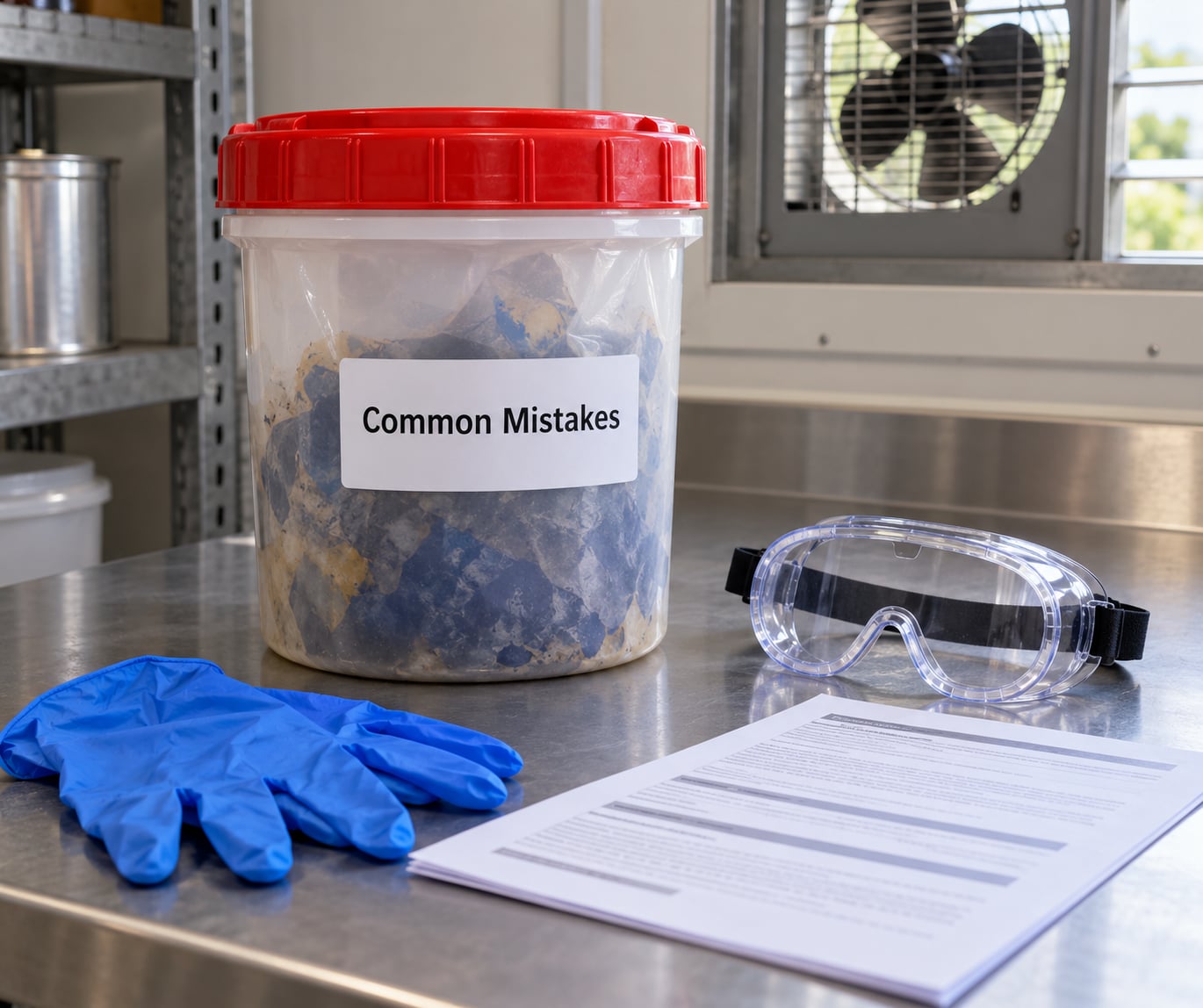
Most of these appear in advice that looks authoritative at a glance. Each one has a straightforward fix.
Pouring resin down a sink or toilet. Resin bonds permanently to pipe walls and to anything it touches, and the cured plug blocks the line. Beyond the plumbing, uncured resin is harmful to aquatic life and it carries into the water system. Cure it instead, every time, no exceptions.
Pouring uncured resin into household trash. A sealed bottle of liquid resin in a waste stream is a hazard for the people who handle that waste, and most facilities will refuse it. Cure first.
Mixing resin types, brands or ages in one waste jug. Different chemistries can react with each other, and old partly cured material contaminates the batch. Label every container with contents and date, and keep them separate.
Ignoring the safety data sheet. The SDS tells you the resin’s sensitising compounds, its disposal code and its transport classification. It takes fifteen minutes to read and it overrides anything you read in a forum.
Working without ventilation. Uncured resin off-gassing in a closed room is a respiratory exposure for you and everyone nearby. Open a window or run an extractor.
Failing to label or seal containers. Unlabelled waste gets refused at the counter or, worse, handled by someone who does not know what it is. Seal lids and write contents, date and cure state.
Assuming cured means completely inert. Curing reduces the hazard sharply, but a part that still smells strongly or stays soft is under-cured. Sniffing is a warning sign, not a test — check the state of the material.
One last safety habit worth keeping: treat every drop as uncured until you have confirmed otherwise. Resin printing gets messy, and the recovery cost of an early spill is far lower than the cost of a cured spill you have to chisel off a bench.
Frequently Asked Questions
Can I pour uncured 3D printing resin down the drain?
No. Uncured resin will bond to pipe walls, can block the line permanently, and is harmful to aquatic life once it reaches the water system. Cure it in sunlight or under a 405 nm UV lamp until it is solid and no longer sticky, then put it in household waste. Solvent and contaminated rinse water are a separate problem and also never belong in a drain.
Can cured resin pieces go in the regular trash?
Usually yes, in most regions. Fully cured resin is inert solid plastic, so small quantities of hardened chunks, supports, failed prints and gloves go in household waste. Two conditions apply: the material has to be genuinely cured rather than tacky or bendable, and your local authority has to agree. Check before you fill a bin, because a few places classify any photopolymer waste as hazardous.
How should I store liquid resin waste before disposal?
Store it sealed, upright and labelled, in a ventilated area away from heat, sunlight and anything a child or pet could reach. Keep uncured waste in its own container and never mix it with a different resin type or an older batch. Airtight, sunlight-proof and dated is the whole checklist. If a container has been open for months in a warm room, assume it needs a professional route rather than a bin.
What should I do if uncured resin spills on the workbench?
Put on nitrile gloves and goggles, then work from the outside edge inward, pushing the liquid into a shallow tray rather than spreading it. Absorb small pools with paper towels or cat litter and bag them as uncured waste. Do not hose it down or wet-wipe it, since that spreads uncured resin thinly. Once the surface is dry to the touch, clean the bench with warm soapy water and cure the collected material.
Can I reuse alcohol wash waste or pour it into a separate container?
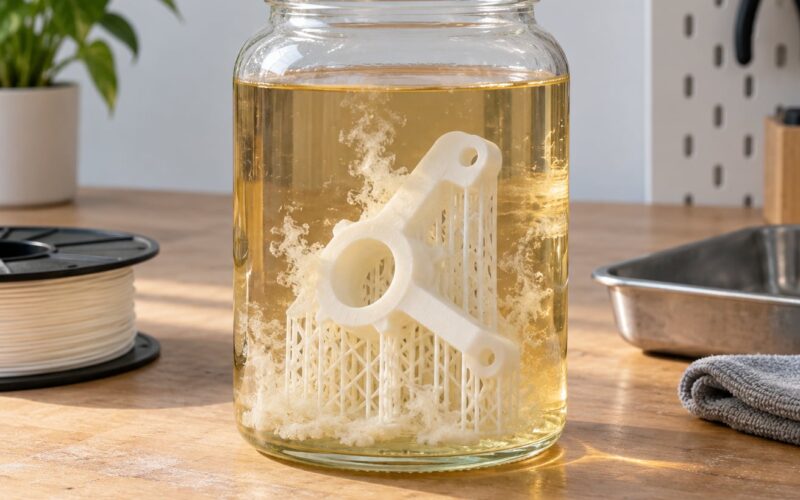
Yes to the first, with limits. Filter the isopropyl alcohol through a straining filter back into a clean bottle and keep reusing it until it stops dissolving uncured resin in a reasonable time and looks murky. Each cycle of washing leaves dissolved resin behind, so performance keeps dropping. Never pour the wash waste down a drain. Take the spent alcohol to a hazardous waste facility as solvent waste, because it remains flammable and chemically active.
Conclusion
Set yourself up this week with a lidded waste tub, a shallow curing tray, nitrile gloves and a sunny windowsill. That single setup covers most of what a hobby printer ever produces.
Then work through five habits: finish prints deliberately instead of stopping mid-layer, keep uncured liquid in one labelled sealed container, cure in thin layers until solid, filter and reuse alcohol until it stops working, and ask your local waste authority about anything left over. Check the manufacturer take-back route for your bottles before anything else, because it removes the hardest stream from your hands entirely.
If you remember one sentence from this guide, make it the cure-first rule. Everything else follows from it, and it is the whole answer to how to handle resin waste disposal properly.