A 3D printing service bureau owns industrial additive manufacturing machines and sells printing capacity, material know-how and finishing as a service. You upload a 3D model, they print it, clean it up, inspect it and post the finished part back to you. Choosing one well comes down to nine checks, and you can run every one of them before you commit a penny.
The most common mistake is picking on unit price and discovering the problem three weeks later, when the parts arrive with support scars, dimensions out of spec and no inspection data. The second most common is treating a quoted lead time as a delivery date. Both mistakes come from skipping the paperwork stage and going straight to checkout.
This guide walks through the whole selection process, from writing your own requirement spec to keeping a production record after the first delivery. It suits makers, engineers, designers, dental and medical teams, and anyone moving a part from a prototype to a small production run.
Table of Contents
- 1What You Need Before You Contact a Bureau
- 2Step-by-Step: How to Choose a 3D Printing Service Bureau
- 31. Define the Part and Its Requirements
- 42. Choose the Appropriate Additive Manufacturing Process
- 53. Prepare Production-Ready Files
- 64. Shortlist Service Bureaus
- 75. Request Comparable Quotes
- 86. Verify Quality and Inspection Capabilities
- 97. Test the Bureau Before Committing to Production
- 108. Review the Contract and Delivery Terms
- 119. Place the Order and Maintain a Production Record
- 12Common Mistakes When Choosing a 3D Printing Service Bureau
- 13Frequently Asked Questions
- 14What files should I send to a 3D printing service bureau?
- 15How much does it cost to use a 3D printing service bureau?
- 16What is a reasonable tolerance for 3D printed parts?
- 17Should I order a sample before a production run?
- 18How do I compare quotes from different service bureaus?
- 19Can a service bureau keep my design files confidential?
- 20Conclusion
What You Need Before You Contact a Bureau
Collect these items before you contact anyone, because every quote depends on them. A bureau that has to chase you for basic information will guess, and guesses become change orders later.
- The model file. STEP where possible, with the mesh watertight and units set correctly, plus a backup STL in millimetres.
- A dimension list or drawing. Name the handful of dimensions that actually matter and the tolerance you need on each one.
- The environment. Temperature, load, chemicals, food or skin contact, outdoor exposure, or anything that rules a material out.
- A surface finish expectation. Raw as-printed, sanded, filled and painted, or a specific texture you need for a mould or a fit check.
- Quantity, and whether more will follow. One prototype and fifty repeat parts are quoted very differently.
- A budget per part and a total budget. Both. Per-part figures hide setup and post-processing charges.
- The date the part is needed and the delivery address. Include the country, because shipping and any duties change the delivered date and cost.
- Any certification requirement. ISO 9001, AS9100, ITAR registration, or a material certificate for your own quality file.
If you cannot fill in the dimension list, that is worth fixing before you start. A bureau cannot quote a tolerance you have not stated, and most will quote a generous default that looks like a promise until the part does not fit.
Step-by-Step: How to Choose a 3D Printing Service Bureau
1. Define the Part and Its Requirements
Write the part down in one paragraph before you look at any website. What does it do, what does it attach to, and what happens if it is slightly out of tolerance?
Sort your project into one of four categories, because each one changes what you should optimise for. A concept model for a presentation cares about surface finish and appearance. A functional prototype cares about fit, strength and material behaviour under load. A jig, fixture or tooling aid cares about hardness, wear and dimensional repeatability. A low-volume end-use part cares about material certification, consistency between batches and traceability.
Turn that paragraph into numbers where you can. Part envelope in millimetres, quantity, whether threads or inserts are needed, whether it snaps into an assembly, and the date the assembly has to work. Nine out of ten quote disputes come down to an unspoken number that only one side assumed.
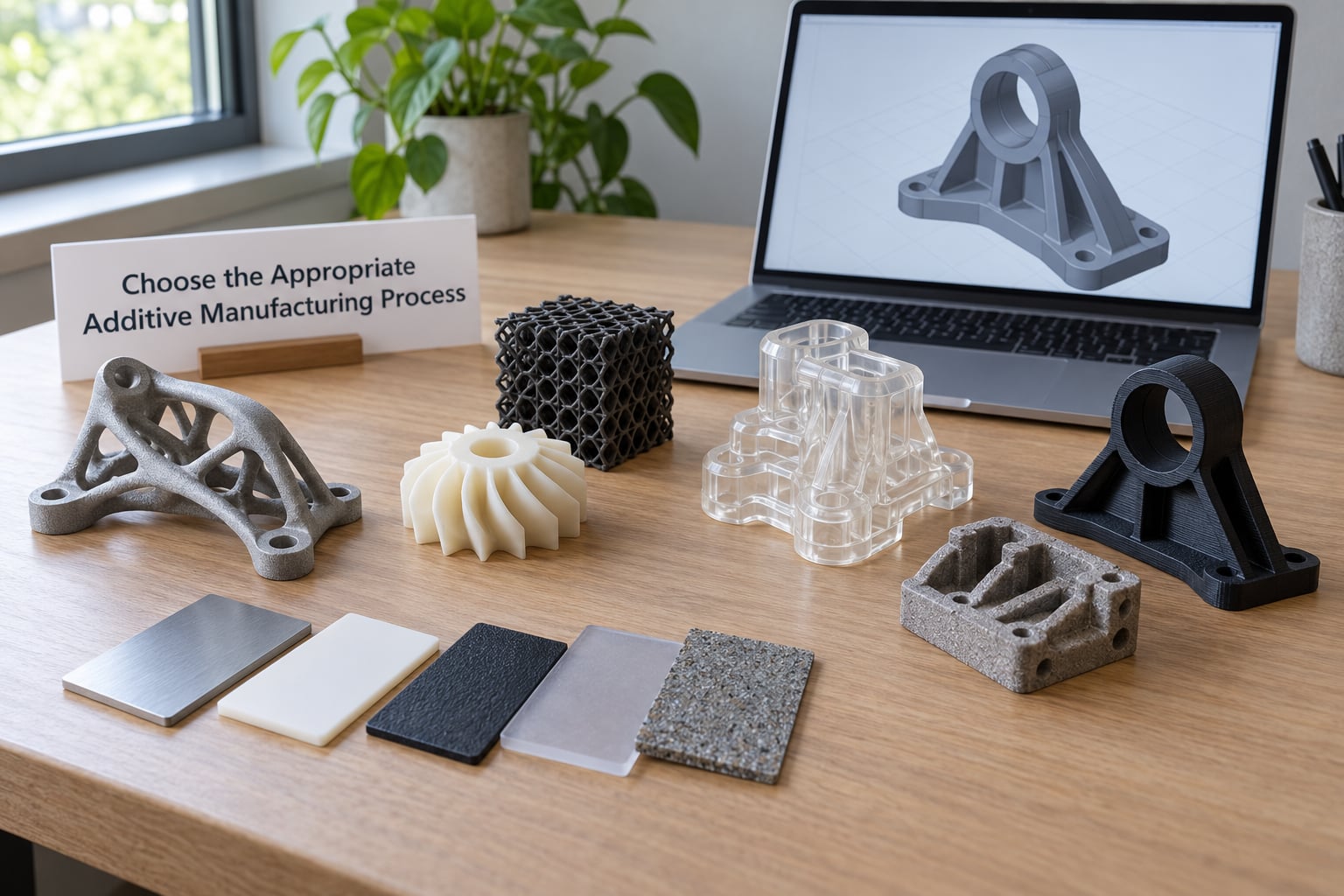
2. Choose the Appropriate Additive Manufacturing Process
Match the process to the geometry, size, strength and finish, not to what a bureau happens to run most of. The same part can be made three ways with very different results and very different failure modes.
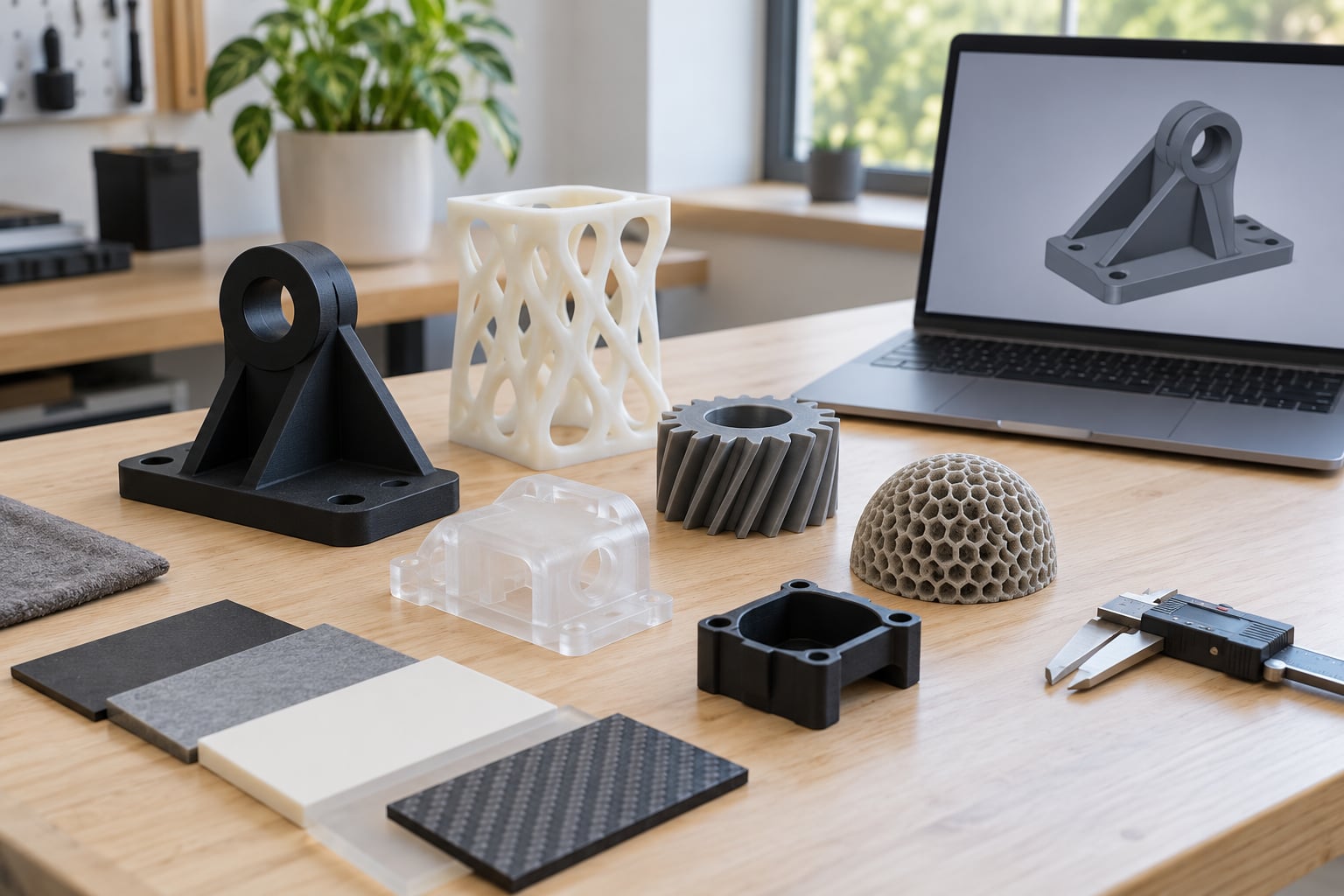
| Process | Best for | Typical materials |
|---|---|---|
| FDM | Large, low-cost, strong prototypes and fixtures; good infill options | PLA, PETG, ABS, ASA, PA, TPU |
| SLA / DLP | Fine detail, tight tolerances, smooth surfaces, patterns and masters | UV-cured resins, castable resins |
| SLS | Complex geometry, functional parts, small batch production without support scarring | PA12 nylon, TPU, composite powders |
| MJF | Consistent repeat batches, production runs, elastomers | PA12, TPU, PP, recycled content grades |
| DMLS / SLM | Strong end-use metal parts, heat and wear resistance | Aluminium, titanium, steel, Inconel |
| PolyJet | Full-colour prototypes, visual models, soft-touch surfaces | Photopolymer, multi-material |
Two things trip people up here. First, layer height sets the finest detail the machine can resolve, so a part needing sharp edges or shallow lettering belongs on SLA, DLP or SLS rather than a coarse FDM layer. Second, SLS and MJF need no support structures at all, which is why support complaints you hear about on premium machines usually come from resin or PolyJet work rather than powder-bed printing.
3. Prepare Production-Ready Files
Get the file right and most of the conversation with the bureau becomes short. Send STEP files for machined or multi-material parts and STL for geometry-only work, always in millimetres with real-world scale applied.
Before uploading, check that the mesh is watertight, that thin walls are thick enough for the chosen process, and that orientation is sensible. Anything printed on its edge in FDM will curl. A bureau that flags these things before printing is doing a design-for-additive-manufacturing review, and that review alone is worth paying for on a complex part.
Decide wall thickness and infill before you ask for a price. A part that will be handled and dropped needs solid walls; a fit-check model does not. If you cannot answer those questions yourself, ask the bureau to propose them and explain why in writing, so the answer lands in your production record.
4. Shortlist Service Bureaus
Build a shortlist of three to five candidates rather than picking the first result. Look for owned equipment rather than brokered work, published tolerance and layer-height figures, a real material data sheet, and parts in your own application rather than generic catalogue photography.
Check where post-processing happens. Finishing that goes out to a third party adds days and a variable you cannot see. Check the material data sheet and certifications rather than trusting a badge: an ISO 9001 claim should be verifiable, and a material certificate should be something they actually hand over with the parts.
Read how they behave under stress. A vendor that replies to most of its negative reviews tells you more about support than a five-star average does. Forum threads about a specific material, such as TPU or a filled nylon grade, are more useful than overall rankings because material-specific expertise is how people actually shortlist.
5. Request Comparable Quotes
Send the same file, the same quantity, the same material, the same finish and the same delivery address to every bureau on the list. A quote for a different scope is not a cheaper quote, it is a different job, and comparing the two wastes everyone’s afternoon.
Ask for an itemised quote and check that these lines are separated rather than bundled:
- Machine time or build time
- Material, including the specific grade and colour
- Support material and support removal
- Post-processing: sanding, filling, painting, dye, smoothing, plating, inserts
- Setup, model prep or engineering labour
- Inspection and any dimensional report
- Packaging, shipping, insurance and any tax or duty
If a quote arrives as a single number with no breakdown, ask again. A bureau that will not itemise is telling you it cannot tell you what you are buying, which makes the first problem with the part your problem too.
| Term | What it actually covers |
|---|---|
| Lead time | Production time from file approval to the part being finished in-house |
| Turnaround time | Order received to shipped, including queueing and prep |
| Shipping time | Carrier transit only, which you do not control |
Get all three written down separately. People read a quoted lead time as a date on the doorstep, and that single misunderstanding causes most of the late deliveries I have seen quoted in printing forums.
6. Verify Quality and Inspection Capabilities
Ask what inspection they do without being asked, and in what form you receive it. A dimensional report listing measured critical dimensions, the machine and material used, and the batch or powder lot tells you far more than a statement that parts are checked before shipping.
First article inspection on the first production batch is the standard you want to aim for. It is a deliberate, measured check against your drawing, and it is different from a spot glance at a few parts at the end. Ask whether calibration is scheduled and recorded, since a machine that drifts out of calibration is the usual cause of dimensional drift on repeat orders.
Material traceability matters more than most people expect. Ask whether the material certificate or lot number can be recorded against your order, and whether repeat orders use the same powder lot or a new one. Colour and material variance between batches is a documented complaint from people who need the same part again in six months.
7. Test the Bureau Before Committing to Production
Order a paid sample or pilot run before a production volume, even if the first quote came from someone you liked. It is the cheapest insurance in the whole process, and it turns opinions into measurements.
Check the sample against a list: the critical dimensions with your own calipers or micrometer, fit into the assembly it was designed for, layer adhesion at the highest-stress section, colour and surface finish, thread engagement or insert strength, and how it holds up under the load you actually intend to apply.
Look at the support areas specifically. Scarring and heavy residue around supports is the single most common complaint in the community about premium resin and PolyJet output, and it is avoidable by asking for a surface finish quote, choosing a process suited to the geometry, or getting design input before printing. If the sample has marks you cannot live with, you now have a conversation with evidence, not an argument from a screenshot.
8. Review the Contract and Delivery Terms
Before the second order goes in, put the terms in writing. You want a clear statement on who owns the design file after the order, whether they will sign a non-disclosure agreement, how long they keep your file, and whether they will delete it on request. Makers outsource their own designs far more often than they realise, and the default is usually not favourable.
Also settle revisions, who pays for a reprint when a part misses the stated tolerance, how change orders are priced, what happens to files if you stop ordering, and who carries the risk once the part ships. If the drawing is silent, the bureau’s terms win by default.
Name an acceptance method too. A CMM or caliper check against agreed dimensions, a visual sign-off against an approved first article, or a simple statement of what you will inspect on receipt. Without one, “it looked wrong” is a weak claim in either direction.
9. Place the Order and Maintain a Production Record
Reconfirm the final drawing, material grade, process, quantity, price, lead time, finish, quality specification, approval method and inspection record before production starts. A single confirmation email covering all ten items prevents most of the scope drift that shows up at invoice time.
Keep the record for the life of the part. Store the model, the quote, the material certificate, the inspection report, the approved sample and the delivered part together in one folder. When the sixth reorder lands, or when a supplier asks for documentation, you want to hand over a folder rather than reconstruct eighteen months of email.
If repeatability matters, order a replacement part from the same batch in the same run so you can compare them. Two parts from one run tell you about the process; two parts from separate runs eighteen months apart tell you about the supplier, which is the thing you are actually buying.
Common Mistakes When Choosing a 3D Printing Service Bureau
Most disappointments trace back to a skipped step rather than a bad machine. Here are the ones that come up repeatedly, each with the fix.
Comparing quotes with different scopes. One quote includes finishing and inspection, another is bare part price. Fix: send an identical specification sheet to every bureau and require the same line items back.
Choosing on unit price alone. A low unit price with no inspection data is a gamble, because the reprints are billed to you. Fix: compare the delivered cost of an accepted part, including post-processing and a realistic scrap allowance.
Overlooking post-processing. The part arrives raw and the finishing was never quoted. Fix: name the finish you need, such as sanded and filled, painted, dyed, vapour smoothed or plated, and get it as a line item.
Accepting a tolerance nobody specified. If you did not state one, the bureau picked a default and is not promising it. Fix: list the critical dimensions and the tolerance on each, and ask what the process delivers as a default.
Skipping the sample. Fix: order one paid part, inspect it against your list, and treat the result as the specification for the production run.
Leaving IP and file handling vague. Fix: ask for the file ownership, retention and deletion terms in writing, and request an NDA if the design is not public.
Treating lead time as a delivery date. Fix: get production time, turnaround time and shipping time as three separate commitments.
A few habits pay off more than the rest. Write your requirement sheet once and reuse it for every quote, every revision and every future order. Ask one question that a broker could not answer, such as which machine runs the job and who removes the supports. Make the sample run a condition of the production order, in writing, rather than a hope. And keep a short list of two providers, because a single-supplier dependency on a part you cannot make yourself is a schedule risk that has nothing to do with printing.
One last note on reviews. Trustpilot and forum threads are a useful first screen and a poor final answer. Discount complaints that name a specific material and a specific dimension, because those are usually real, and discount single-sentence rants equally hard. The pattern worth noticing is a vendor replying to negatives with specifics about the material and the failure, not a pattern of star counts.
Frequently Asked Questions
What files should I send to a 3D printing service bureau?
Send a STEP file when the part needs colour, material assignment or CNC finishing afterwards, and a watertight STL in millimetres for geometry-only work. Include a dimension list with tolerances on the critical features, a note on the environment the part will live in, and the finish and quantity you want quoted. If you are unsure, send both the STEP and the STL and say which process you think suits the part.
How much does it cost to use a 3D printing service bureau?
There is no single price because the same part changes cost with volume, material, layer height, build time, finish and inspection. Resin and powder processes sit at one end, large FDM parts at the other, and metal sits well above both. The useful comparison is not the number on the website but the delivered cost of an accepted part, which is why an itemised quote and a sample run matter more than any headline rate.
What is a reasonable tolerance for 3D printed parts?
Ask the bureau what its process delivers as a default, then state your own requirement per dimension. A common expectation is loosely plus or minus a few tenths of a millimetre on critical features for laser and powder processes, and looser for FDM. Process, material, size and orientation all move that number, so a tolerance you did not write down is a tolerance nobody has promised to hold.
Should I order a sample before a production run?
Yes, and pay for it as a normal order. A sample or pilot run tells you whether the dimensions hold, whether the part fits, whether the surface finish survives handling and whether the process is right for the geometry. It also gives you an approved first article to compare later batches against, which is far more useful than a general quality promise made before anything has been printed.
How do I compare quotes from different service bureaus?
Send the same file, quantity, material, finish and delivery address to everyone, and require the same itemised lines back: machine time, material, supports, post-processing, inspection, shipping and tax. Then confirm the tolerance and layer height quoted, the stated lead time, and what happens if a part is rejected. A cheaper quote with a thinner scope is a different job, not a better deal.
Can a service bureau keep my design files confidential?
Most will, but most will not say so unless you ask. Get the terms in writing: who owns the file after the order, whether they will sign a non-disclosure agreement, how long they retain it, whether they can use it as a portfolio or case study, and whether they will delete it on request. If your design is not public and the bureau is vague, treat that vagueness as a no and find one that answers.
Conclusion
Choosing a 3D printing service bureau is a paperwork exercise before it is a shopping exercise. Write your requirement sheet, match the process to the part, shortlist three to five bureaus, send an identical spec to each, demand itemised quotes, verify inspection and material traceability, then pay for one sample before you commit to volume.
Start today with the dimension list. Everything else in this guide depends on it, and it takes the longest to get right.