To find clients for 3D printing services, you need one narrow niche, published proof you can actually produce the part, and a weekly routine that puts your offer in front of people who already buy printed parts. Most new operators do the opposite: they list a generic service everywhere, price by the gram, and wait. That approach takes months to produce one inquiry.
The faster route is simpler. Pick the industry you understand, publish real finished parts with the material and tolerance stated, then spend most of your outreach hours on direct conversations with local businesses and small engineering teams. Marketplaces and communities fill the gaps; they rarely carry a service on their own.
This guide is written for home and studio operators, freelance CAD designers, and small print shops that already have working printers and steady output but no pipeline. You do not need more equipment first. You need a way to be found.
Table of Contents
- 1What You Need
- 2Step-by-Step: How to Find Clients for 3D Printing Services
- 3Choose a profitable niche
- 4Build proof of capability
- 5Create a focused portfolio and service page
- 6Find clients for 3D printing services where buyers already gather
- 7Contact prospects with a specific offer
- 8Qualify and follow up
- 9Convert interest into repeat work
- 10Common Mistakes
- 11Frequently Asked Questions
- 12Can I actually make money 3D printing?
- 13How much should I charge per 3D print?
- 14Where should I list my 3D printing services?
- 15Do I need a website to get 3D printing clients?
- 16Can I pay someone to 3D print something for me?
- 17How long does it take to get the first 3D printing client?
- 18Conclusion: Where to Start This Week
What You Need
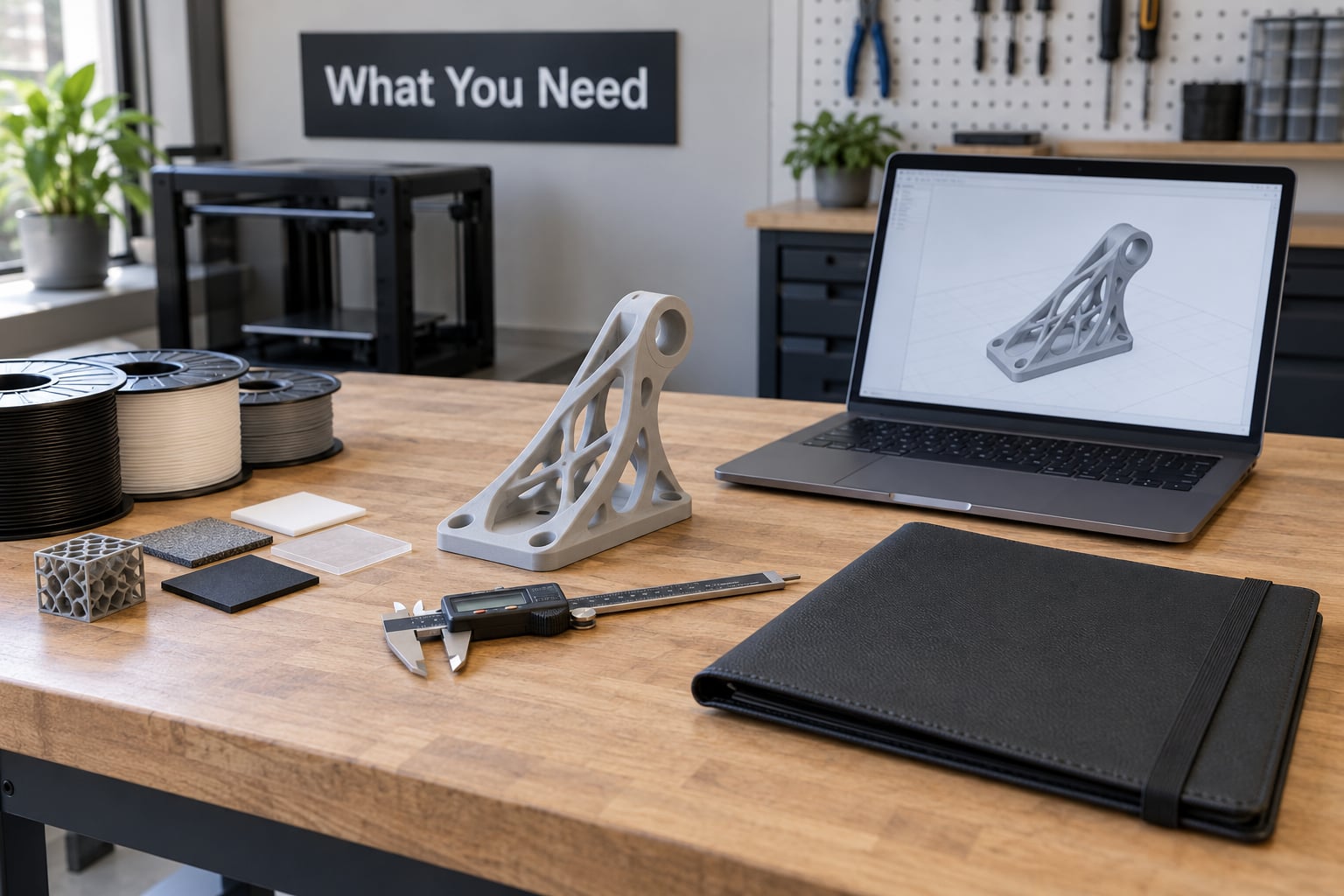
Before you contact anyone, five things need to exist. Without them, conversations stall at the first question about turnaround and cost.
A written service menu. One page that lists the parts you print, the materials you run, the tolerances you can hold, your typical turnaround, and what you will not do. A buyer who has to email you to find out whether you print in nylon wastes an email, and many of them never send the second one.
Three to five proof parts. Finished, photographed in use, ideally for the niche you picked. A single scratch-free prototype on a clean background tells more than a wall of hobby prints. Show the part assembled, next to something familiar for scale.
An intake form. A short questionnaire covering the application, material preference, quantity, dimensions, tolerance needs, file format, and required-by date. This one piece of infrastructure removes most back-and-forth and filters unserious inquiries before they reach you.
A quote template. The same structure every time: scope, material, quantity, unit price, total, turnaround, what is included in finishing, and what happens if the part fails inspection. Consistency makes you look established even when you are two months into this.
A prospect list. A spreadsheet of 50 to 100 named organizations in your chosen niche with a contact, a plausible use for printed parts, and the date you reached out. A list beats aimless posting, and it lets you see your own follow-up rate after a month.
Two smaller items matter more than they sound: a way to take payment and a one-paragraph statement about file ownership and confidentiality. Buyers who send you a CAD file for a product they are about to launch will ask whether you keep it and whether you will print it for someone else. Have an answer ready.
Step-by-Step: How to Find Clients for 3D Printing Services
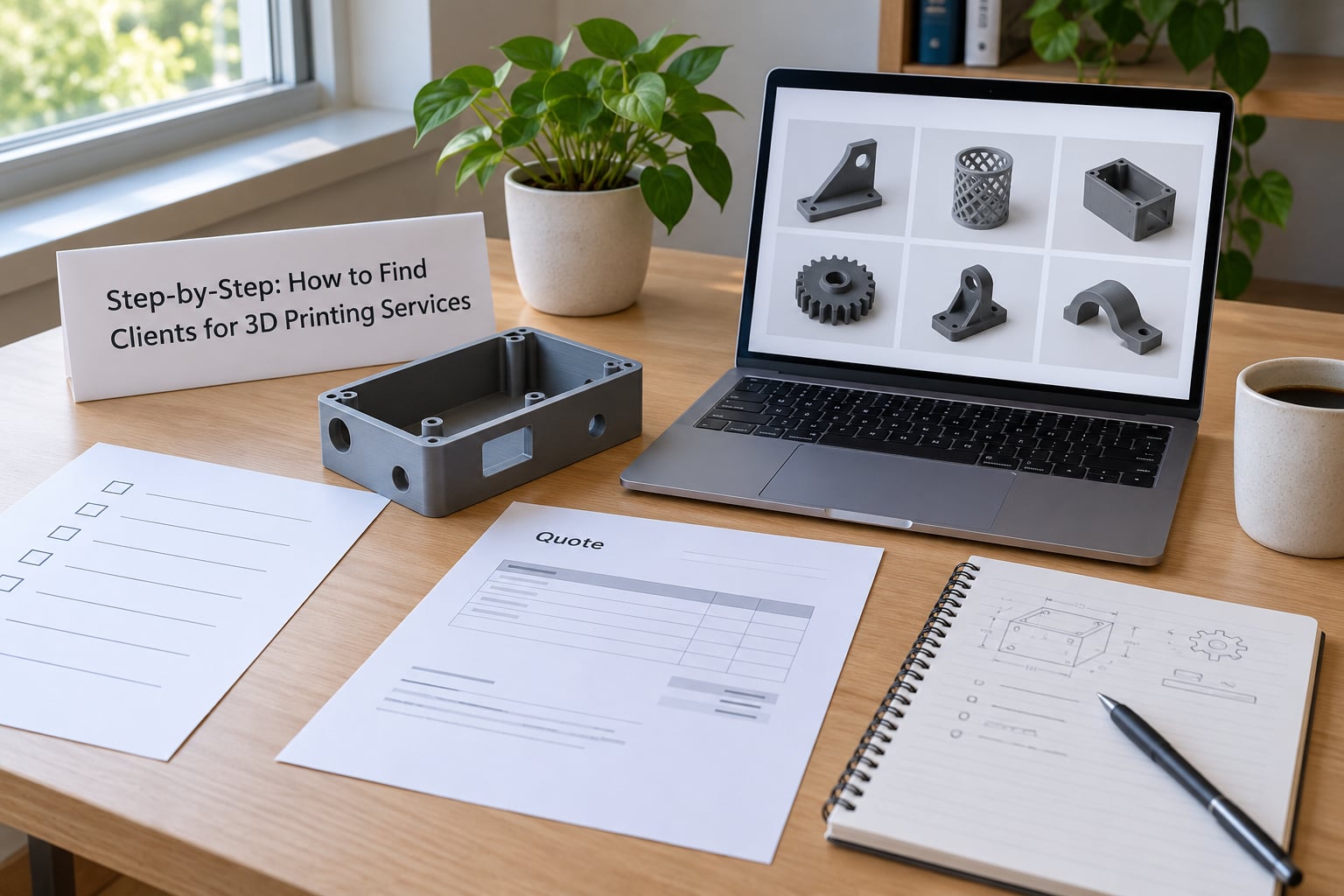
The system below runs in order. Each step depends on the one before it, so skipping proof or niche selection usually shows up later as wasted outreach hours.
Choose a profitable niche
Choose a niche by looking at what you already understand, not at what sounds impressive. Product developers, architects and scale modelers, tabletop gaming, cosplay and prop work, dental and medical models, jigs and fixtures for machine shops, retail display stands, and replacement parts for discontinued equipment all repeat. Hobby one-offs do not.
A good niche has three traits: you can explain the application in one sentence to someone who has never heard of your printer, the requirements repeat from job to job so your setup stays tuned, and the value of the part is high enough that price is not the only deciding factor.
Then decide which side of the table you sell to. B2B buyers need a functioning part, not a hobby object, and they pay for reliability. Hobby buyers buy the outcome and care about look and color.
| Factor | B2B clients | B2C hobby clients |
|---|---|---|
| Typical job | Prototypes, jigs, fixtures, short-run parts, display stands | Cosplay props, miniatures, organizers, display pieces |
| Order pattern | Repeat cycles with revisions | Mostly single pieces |
| Sales cycle | Weeks to months | Days |
| What they filter on | Tolerance, material certification, lead time, confidentiality | Appearance, color, price, turnaround |
| Where they look | Direct outreach, associations, supplier searches, referrals | Marketplaces, Reddit, Facebook groups, Instagram |
| Margin potential | Higher, because finishing and accuracy carry value | Lower, because buyers compare quickly |
Run both at first if you must, but market them separately. One page that says “we print everything” reads like a hobby. A page aimed at machine shops reads like a supplier.
Build proof of capability
Proof is what converts a message into a call, and buyers filter on specific things. From buyer-side discussions in print communities, the recurring questions are lead time, accuracy, material options, finishes, and whether pricing is transparent. Answer all five on your page before anyone asks.
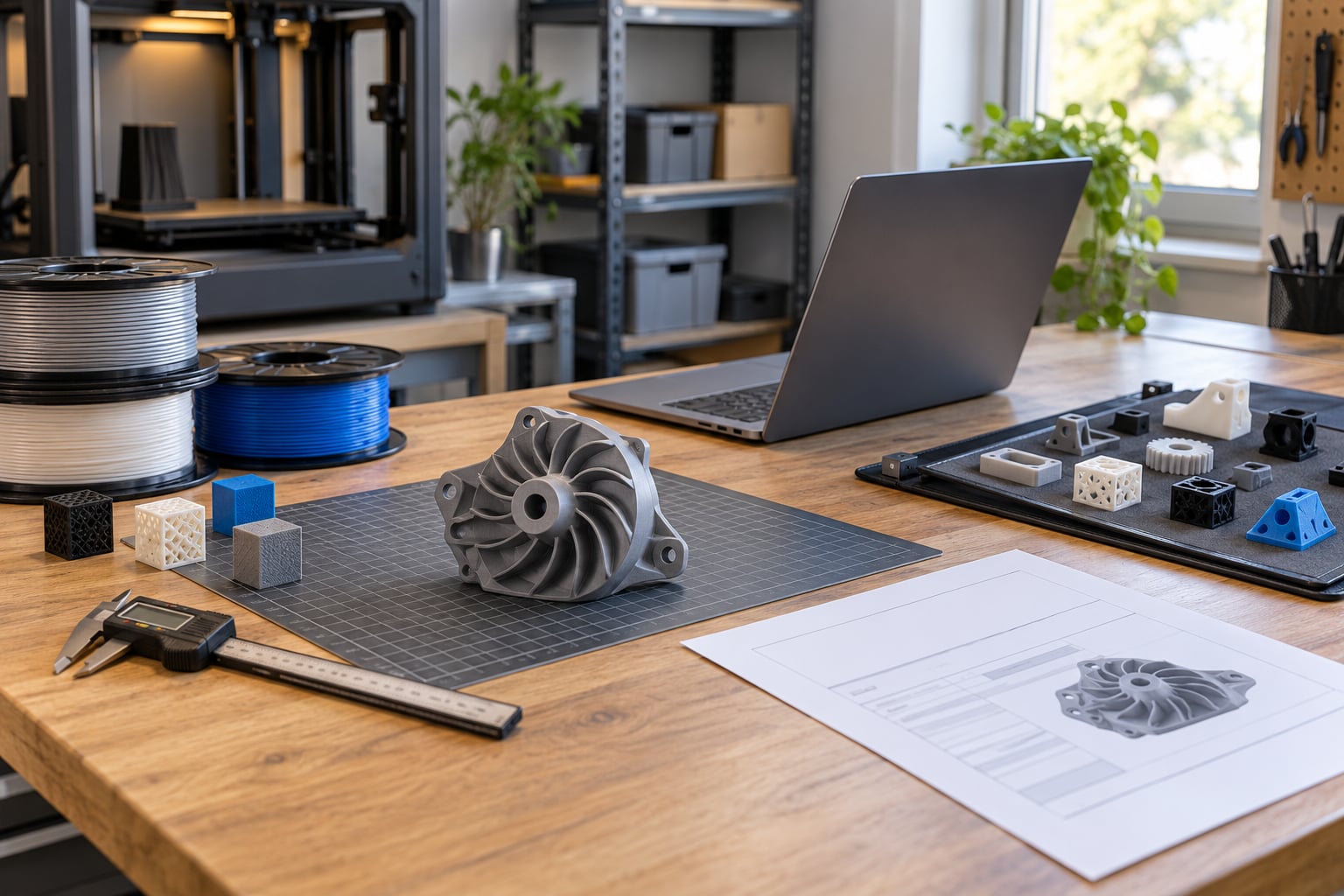
Turn that into artifacts. Photograph finished parts at a consistent angle with a ruler or caliper in frame. State the layer height, material, and post-processing you used. For tolerance work, print a test fit and report what actually happened rather than what the slicer promised.
Write short case notes. Four lines each: the problem, the material and settings, the result, and the turnaround. Three of these read better than a portfolio of twenty unrelated objects, because they show a process rather than a hobby.
Ask permission to name clients, or offer a simple written testimonial with one sentence about what they ordered and how it went. A single verifiable reference from a real business outweighs a wall of social posts.
Create a focused portfolio and service page
One page is enough at the start. It needs the niche in the first line, four to eight relevant photos, a material list with what each is good for, stated tolerances and layer heights, turnaround times by part size, the finishing you offer, and a clear way to request a quote.
Say what you will not print. Powder-based processes, food-contact parts, and load-bearing safety components are common examples. Stating exclusions reads as competence and saves you from jobs you would regret.
Handle the file question in writing: you do not keep client files, you do not print them for anyone else, and you will sign an NDA for commercial work. Then add a simple RFQ form that submits straight to your inbox.
Do I need a website? No, not to start, but you need one surface that a stranger can land on and understand in under a minute. A single well-built page with a contact form usually covers that in the first months. A free marketplace listing works as a supplement, not as your only shopfront, because buyers there compare on price first.
Find clients for 3D printing services where buyers already gather
Clients for a print service come from four places: the niche community, the local business network, the direct outreach list, and marketplace listings. Run all four, but weight them. Niche communities and local outreach produce the first real work; marketplaces mainly teach you where your price sits.
Communities are the most reliable first source of paying jobs, according to consistent advice across 3D printing forums, and that matches what actually happens: hobby projects arrive through them, and the hard technical work arrives through referrals that start there. Post finished work with the file settings, answer questions about your process, and only mention availability when someone asks. Members notice promotional posts immediately and ignore them.
Local and B2B channels are less crowded and slower. Industrial directories, maker and hardware associations, chambers of commerce, your local makerspace, and supplier registration pages all feed a steady trickle of RFQs. Small engineering firms and product designers rarely search marketplaces; they find suppliers through referral and repeat contact.
Partner channels are underrated. Repair shops, Etsy sellers, architects, product designers, cosplay prop makers, and small manufacturers all need printed parts sometimes and none of them have a printer. Offer a simple referral arrangement and mention it in one line, without pushing.
| Channel | Best for | What it costs you | Control |
|---|---|---|---|
| Niche Facebook groups, subreddits, Discord servers | First hobby jobs, feedback, referrals | Time and community etiquette | Full |
| Direct outreach to local businesses | Recurring small-business work | A few hours a week | Full |
| LinkedIn prospecting | Engineering and product teams | Message credits | Full |
| Freelance platforms | Design and print projects, test volume | Fees, competition, price pressure | Low |
| Model marketplaces | Selling designs, not printing | Fees, listing work | Medium |
| Service marketplaces and bureaus | Overflow when your queue is full | Fees, thin margins | Low |
| Google Business Profile and local SEO | Local search visibility and walk-in trust | Photos, replies, updates | Full |
For local visibility, claim a Google Business Profile early. Add real photos of your work and setup, list your actual service area, post when you finish a notable part, and answer every question in the Q&A section. Most new service businesses are invisible in local search simply because nobody filled in the profile.
Contact prospects with a specific offer
Outreach works when it names the prospect’s likely application. Generic messages get deleted, and the members who complain about unsolicited promotion online are usually reacting to exactly that.
Keep it to five lines: who you are in one sentence, the specific part their business might need, proof you have made that kind of part, a concrete next step, and an easy exit. Offer a short paid or discounted test print on a new account. That single offer removes most of the risk for a buyer who has never heard of you.
Example structure:
- Line 1: your niche and location, for example, “I run a small prototyping service in Sheffield focused on jigs and fixtures for small machine shops.”
- Line 2: their likely need, “I saw you machine aluminium housings for pump assemblies, which usually means brackets and drilling jigs go through a slow manual process.”
- Line 3: proof, with a photo, “Here are two printed locating jigs I made for a similar shop, printed in PETG and sanded to fit.”
- Line 4: the offer, “I will print one small test fixture for you at a reduced rate so you can judge fit and finish before committing.”
- Line 5: the ask and the exit, “Worth a ten-minute call this week? If it is not a fit, no problem.”
For phone calls, the first fifteen seconds decide the outcome. Lead with the problem you solve, not your machine list. Mention a part you built for a similar company so the conversation has a reference point.
Build the prospect list in five passes: search your niche plus your region for companies with the right profile, check association and chamber member directories, scan supplier portals in your industry, walk local industrial and commercial strips, and ask every existing contact who else has the same problem.
Qualify and follow up
Not every inquiry deserves machine time. Six questions sort them fast: what is the part for, what material and quantity, what tolerance does it need, when is it needed, is there a drawing or file ready, and who approves the spend.
If a prospect cannot answer material, quantity, and deadline, treat it as a discovery job rather than a quote. If the deadline is impossible, say so immediately with the realistic date. Losing one impossible job is far cheaper than a rushed print that arrives late.
Decline bad-fit work plainly: jobs under your minimum order value, one-off pieces with no repeat potential when your capacity is full, requests to print someone else’s licensed model, and anything you cannot verify for safety. Saying no early protects the calendar you are trying to fill.
Follow up at useful intervals rather than daily. Four touches is usually enough: the first message, a short follow-up a week later, a specific note with a photo or a relevant answer around day ten, and one final message that closes the loop politely. Add the prospect to a spreadsheet with a next-action date, because most deals close on the third or fourth touch.
Price with a formula rather than a feeling. Start from material cost, multiply by three to five to cover machine time and failure rate, then add labor for slicing, support removal, finishing, and inspection. Set a minimum order value that reflects the fifteen minutes of attention even a simple part consumes. Operators on freelance platforms report that undifferentiated listings force a race to the bottom, and the way out is a narrow specialty with a stated finish level.
Convert interest into repeat work
The first job is a test of whether you are worth a second one. Confirm specifications in writing before printing, including material, quantity, finish, and what tolerance the part has to hold. Restate the risk you are carrying rather than burying it.
Deliver on or before the date you promised, and include a short note describing what you did and anything the client should watch for. Small quality steps matter: check parts against the drawing, photograph the finished batch, package so parts do not arrive scratched.
Then ask for two things in writing: a short review, and an introduction to anyone with the same problem. Timing matters. The best moment is right after the part does its job in the client’s hands, not the day it ships.
Build a re-order rhythm. Set a reminder for four to six weeks after delivery to ask whether the next revision or batch is coming. Prototype work tends to cycle three to five times before production, so the second and third jobs are usually already in motion before the first one lands.
Keep a simple record of response rate, quote win rate, repeat rate, and average time from first contact to delivery. If response rate is thin, the list or the message is the problem. If quotes go out but rarely convert, the proof or the pricing is the problem.
Common Mistakes
Most stalled print businesses are not bad at printing. They are bad at being chosen. These are the errors that show up again and again, with a fix for each.
- Marketing to everyone. “We print anything in any material” tells a buyer nothing, so they keep looking. Fix: name one niche on the front of your page and let the rest of your work speak for itself.
- Waiting for discovery. Posting once and expecting inbound from nothing is the most common thread in business forums. Fix: pick a channel and work it on a schedule, fifteen minutes a day.
- Pushing promotions in communities. Groups are quick to silence a new member who advertises. Fix: contribute answers and finished work for weeks before you ever mention availability.
- No published tolerance or turnaround. Buyers cannot evaluate you without numbers, so they evaluate you on price instead. Fix: state layer height, typical accuracy, and turnaround by part size.
- Quoting by the gram. Weight ignores machine time, supports, labor, and failure rate, and it underprices the jobs that take twelve hours. Fix: use a formula, then charge for finishing as a separate line.
- Ignoring post-processing. Operators repeatedly point out that finishing is where the margin lives. A sanded, primed, painted part sells at several times the raw print price for nearly the same machine time. Fix: offer finishing tiers explicitly.
- Selling licensed models. Many downloadable files are personal-use only, and printing them for sale creates real exposure. Fix: check the license, sell your own designs, or use commercial-licensed models only.
- Disappearing after delivery. Clients who never hear from you again assume the relationship ended. Fix: schedule the check-in and the referral ask at delivery time.
- Saying yes to everything. Small unprofitable jobs consume the hours that a repeat customer needed. Fix: publish a minimum order value and a lead time, and hold both.
- Measuring success in weeks. B2B prototyping buyers work on monthly cycles. Judging a business on the first three weeks guarantees a false negative. Fix: set a 90-day measurement window.
A useful addition to that list: separate your pipeline into inbound and outbound. When every inquiry arrives by chance, you cannot tell whether a quiet month means bad luck or a broken routine. Track both, and expect outbound to be the steadier of the two.
Frequently Asked Questions
Can I actually make money 3D printing?
Yes, but rarely through one-off hobby prints alone. Operators who earn consistently do it by picking one industry, quoting from a cost formula that covers material, machine time and labor, and adding post-processing as a paid line. Budget for failed prints and unpaid quoting time, and expect the first quarter to feel slow while your proof builds.
How much should I charge per 3D print?
There is no single rate, but there is a reliable method. Start with material cost, multiply by three to five to cover machine time and failures, then add labor for slicing, supports, finishing and inspection. Publish a minimum order value and charge finishing as its own line. Buyers compare hourly rates badly, so quote per part or per project instead.
Where should I list my 3D printing services?
Spread across several: a niche Facebook group or subreddit for early hobby work, LinkedIn and direct outreach for engineering buyers, a Google Business Profile for local visibility, and one freelance platform for occasional design or print projects. Treat model marketplaces as a place to sell designs rather than printing. Each channel takes a few hours a month, not a full day.
Do I need a website to get 3D printing clients?
Not on day one, but you need one surface a stranger can understand quickly. A single page with a niche headline, finished-part photos, a material list, stated tolerances and turnaround, and an RFQ form covers most of the first year. Marketplace listings can supplement it, but buyers there sort by price first, which undercuts a service built on quality.
Can I pay someone to 3D print something for me?
Yes, through online print services, service marketplaces, local bureaus, and independent operators like those covered here. You will normally send an STL or CAD file and get a quote before printing. Provide material, quantity, finish and deadline, and ask for stated tolerances and turnaround so you can compare services fairly.
How long does it take to get the first 3D printing client?
Plan on weeks rather than days for hobby work and months for B2B prototyping accounts, which is why a 90-day window is fairer than a weekly one. Most first clients arrive through community participation or a referral from someone you helped earlier. The fastest accelerator is a paid or discounted test print, because it turns an unknown supplier into a verified one.
Conclusion: Where to Start This Week
Start with the niche and the proof, because everything else depends on them. This week: write the one-page service menu, pick three parts that prove you can do the work, photograph them properly, and build a list of fifty prospects in your chosen industry.
Then start conversations. Five outreach messages a day, four follow-ups, and one useful post in the community your buyers already read. Most new print services find their first steady client within ninety days of doing exactly that, and the ones that grow further are the ones that turn the first order into a second one.