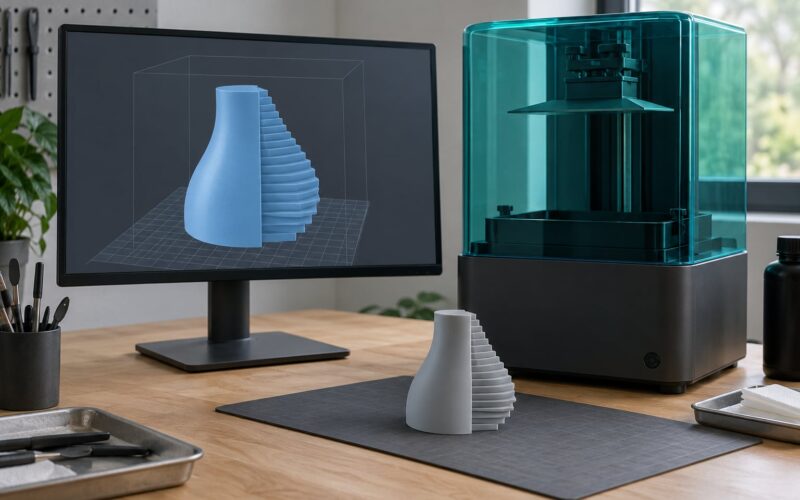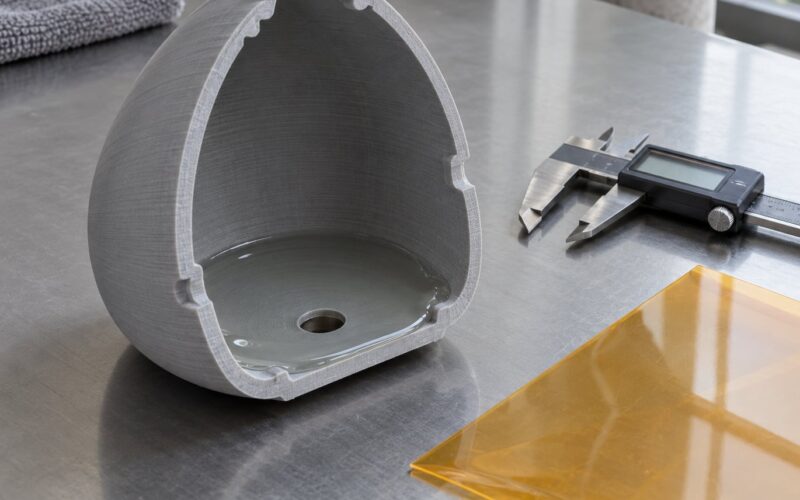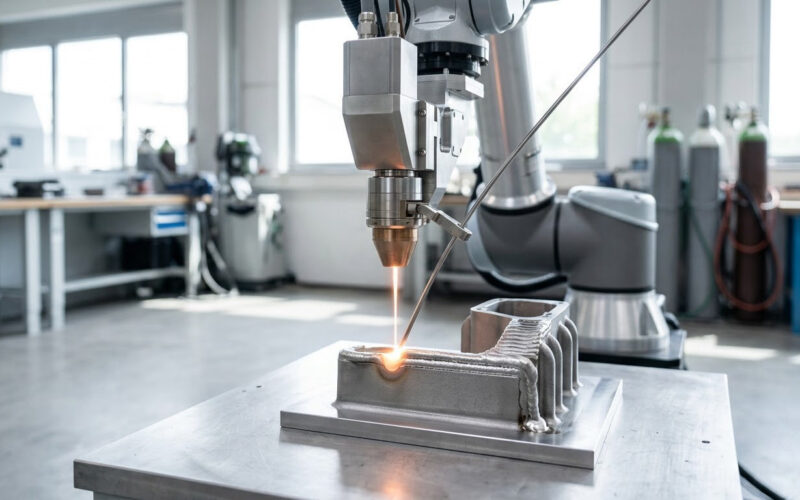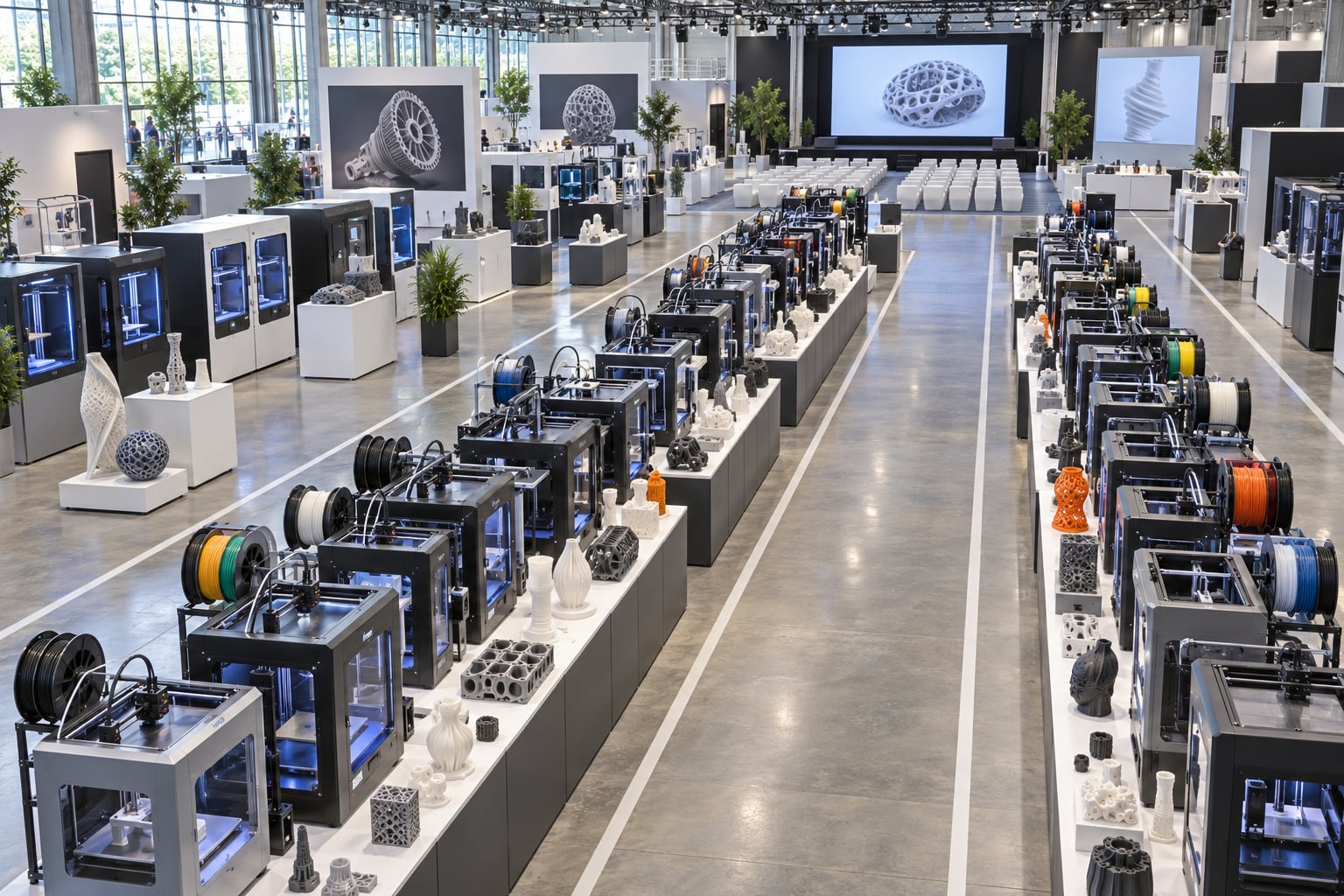
What to expect at a 3D printing expo is simpler than the floor plan makes it look: rows of exhibitor booths running live printers, a programme of talks and workshops, sample parts you can pick up and turn over in your hands, and a hall full of people who build, buy and use this equipment for a living. A good day comes down to planning a handful of priorities before you arrive, then spending your time on the floor talking to the people running the machines.
Most first-timers arrive with a photo gallery in mind and leave with a shortlist of suppliers and three or four names they intend to email. That is a realistic outcome, and a useful one, whether you were hunting for your first desktop printer or scouting machines for a production line.
This guide covers what the day actually feels like, how to read the schedule, what to look at on the floor, and how to compare what you saw once you are home. It is written for 2026 events, and the same habits work whether you walk into a public maker expo or a professional additive manufacturing trade show.
Table of Contents
- 1What to Expect at a 3D Printing Expo Day
- 2How to Check the Schedule Before You Go
- 3What You Will See on the Exhibitor Floor
- 4What to Look for at a 3D Printing Expo Booth
- 5How Live Printer Demonstrations Reveal Differences
- 6Which Talks and Workshops Are Worth Attending
- 7How Useful Are Free Samples and Giveaways
- 8How to Get Value from Networking at an Expo
- 9What to Bring and What to Skip
- 10How to Plan a One-Day Expo Schedule
- 11How to Compare Options After the Expo
- 12Frequently Asked Questions
- 13Do I need to buy tickets for a 3D printing expo before attending?
- 14Are live 3D printing demonstrations reliable enough to judge a machine?
- 15Should makers attend a professional additive manufacturing expo?
- 16How early should I arrive at a 3D printing expo?
- 17Is it worth attending a 3D printing expo if I do not plan to buy equipment?
- 18Can I test-print or use filament at a 3D printing expo?
- 19What to Do First When You Arrive
What to Expect at a 3D Printing Expo Day
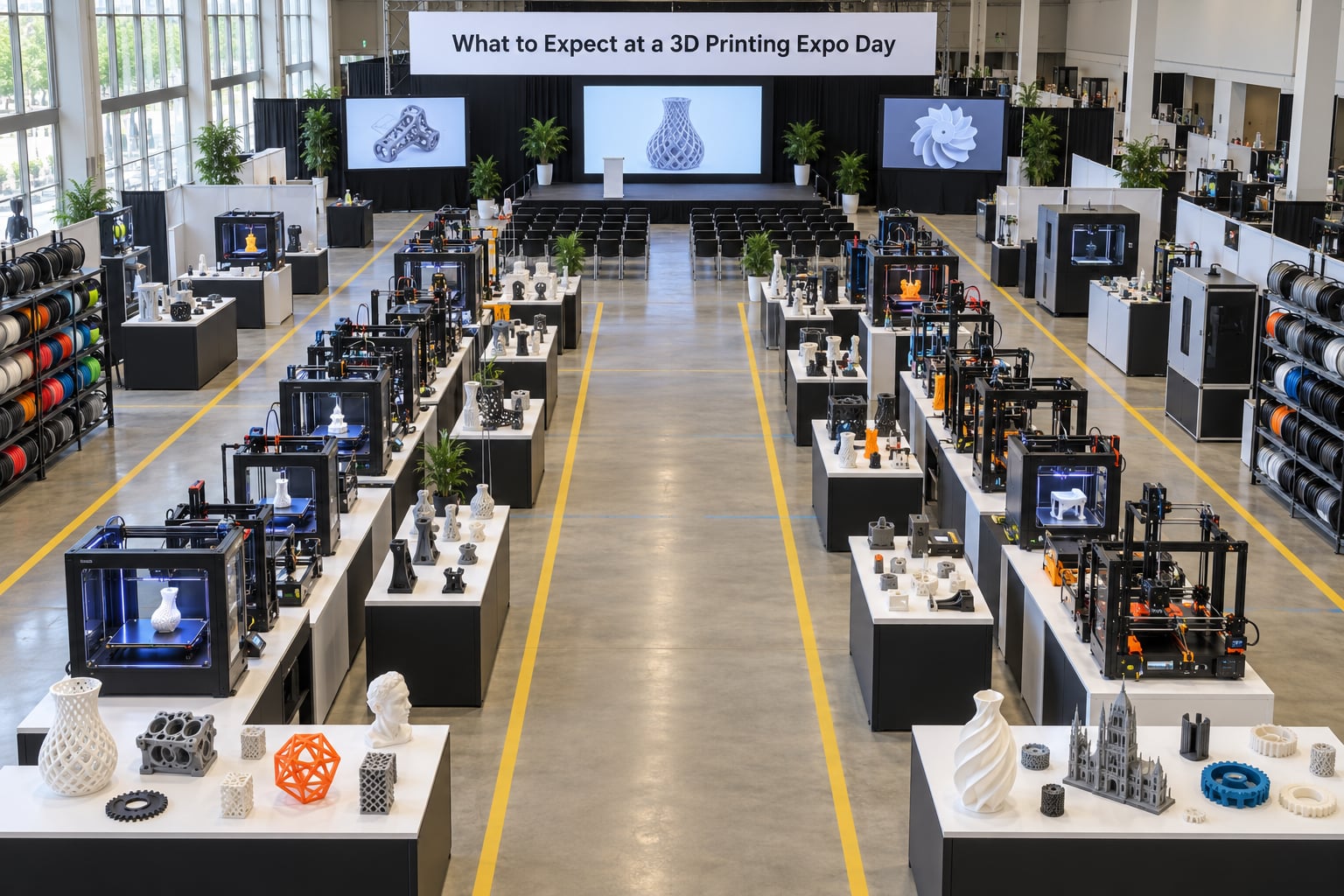
Every expo day is built from the same handful of parts. You walk the exhibit hall, you catch live demonstrations, you sit in on technical sessions, you collect literature and samples, and you talk to people whose names you did not know that morning. The only real difference between a small regional show and a large international event is how much of each you can fit in.
| What you will encounter | Most useful for | Time to allow |
|---|---|---|
| Exhibitor booths with printers running | Seeing hardware and talking to engineers | 15 to 40 minutes each |
| Scheduled live demonstrations | Judging machine behaviour under real conditions | 20 to 30 minutes |
| Talks, seminars and workshops | Designers, engineers and students | 30 to 90 minutes |
| Material showcases and swatch walls | Choosing filament, resin or powder | 10 to 20 minutes |
| Service bureau and software stands | Outsourcing parts or managing a print workflow | 15 to 30 minutes |
| Hall networking and evening events | Anyone looking for suppliers, staff or partners | 45 minutes and up |
Two things surprise people more than the machines. The first is how much of the hall is not machines at all — software, scanning, post-processing, powder handling, inspection and materials suppliers fill as much floor space as the printer manufacturers do. The second is how much of the value is conversational: a five-minute answer about lead times or material limits can matter more than the printer you spent twenty minutes watching.
Large halls also have a rhythm. The first morning is quiet and technical, midday is crowded and hard to move, and the final hour before closing tends to relax again. Plan your priority conversations for the quiet periods.
How to Check the Schedule Before You Go
The schedule is published well before the doors open, and reading it properly is the single highest-value thing you can do at home. Look for registration and badge pickup hours first, because they usually open earlier than the exhibition itself and earlier is quieter.
Then check the exhibition hours, the times of the talks and workshops you care about, and the scheduled demonstration slots. Many demos run several times a day at fixed times rather than continuously, so a booth that looked packed at 11am may be free at 3pm.
Workshops are the exception. Hands-on sessions usually have a seat limit and often require you to sign up when you register or claim a place at the door. Leave those for last in your planning, but do not leave them out — the ones I would protect are the short sessions where you handle a machine yourself rather than watch it.
Finally, note the deadline for buying a badge or a conference pass. Many events price the expo floor and the full conference pass separately, and several raise the price after a cutoff date. Decide which you want before you book travel, not at the door.
A simple process works: mark every session you might attend, cut it to two, and put those two in your phone with reminders an hour before they start. Everything else becomes optional.
What You Will See on the Exhibitor Floor
Printer manufacturers are the obvious category, and they split into desktop machines for makers, industrial machines for production, and specialist systems for metals, composites, very large parts or clean-room medical work. The useful signal is not the size of the booth but whether an application engineer is standing behind the printer rather than a sales rep with a tablet.
Material suppliers fill a lot of floor space. You will see filament and resin in every colour under the sun, engineering polymers such as nylon and TPU, plus powders for powder-bed processes. Bring a sample of what you currently print, if you can. Two materials that look identical on a shelf behave very differently in the hand, and booth staff are happy to explain why.
Software stands are easy to walk past and often worth a stop. Slicing, simulation, build preparation, machine monitoring and fleet management all shape how much output you actually get from a printer, and much of this software is available well before a machine is.
Service bureaus sit in the same category. If you do not plan to own machines, these booths are where the real conversation is: what they run, what they charge, tolerances they hold, and whether they will quote your geometry.
Scanning and metrology companies will try to show you how a physical object becomes a printable file. Post-processing vendors handle washing, curing, blasting, heat treatment, surface finishing and inspection. Industry organisations and research institutes usually take a small stand with posters and a few researchers, which is a cheap way to find out who is publishing what.
Public maker expos and professional trade shows differ more than visitors expect. A maker expo is bright, louder, part science fair and part craft market, with consumer printers, accessories and creators. A professional additive manufacturing trade show is quieter and denser, organised by sector rather than by hobby, with production equipment, case studies and a conference programme. Going to the wrong one is the most common mistake first-timers make.
What to Look for at a 3D Printing Expo Booth
Judging a 3D printing expo booth on the parts hanging on the wall is backwards. Those samples were chosen to look good. Judge the booth on what the staff will show you when you ask.
- Build volume in real units. Ask for the printable dimensions, not the machine’s outer footprint, and check whether the usable area shrinks with build plate or cooling fitted.
- Materials it actually supports. Not the marketing line, the list that runs today. Follow with what the manufacturer recommends against and why.
- Throughput. Ask what they consider a realistic production day, then ask how many machines it takes to hit a given monthly volume.
- Accuracy and repeatability. Which surfaces are machined afterwards, and how they verify tolerances on finished parts.
- Safety and monitoring. Enclosure, filtration, interlocks, and how much of the process can be watched from a phone.
- Automation. Material changes, break handling, queueing between jobs and how unattended a night run really is.
- Support. Who answers a fault call, in which time zone, and what a spare part delivery looks like.
- Running cost. What consumables, powder changeouts and service visits add to a year of ownership.
- The live sample. Ask to handle a part printed on that specific machine, and look at layer lines, corners, overhangs and surface finish up close.
One printed sample cannot tell you the whole story. It shows the machine’s best day, on a part somebody chose, using settings chosen for a photograph. Ask how long it took including setup, whether support removal was finished by hand, and whether the same result holds on a batch of fifty.
How Live Printer Demonstrations Reveal Differences
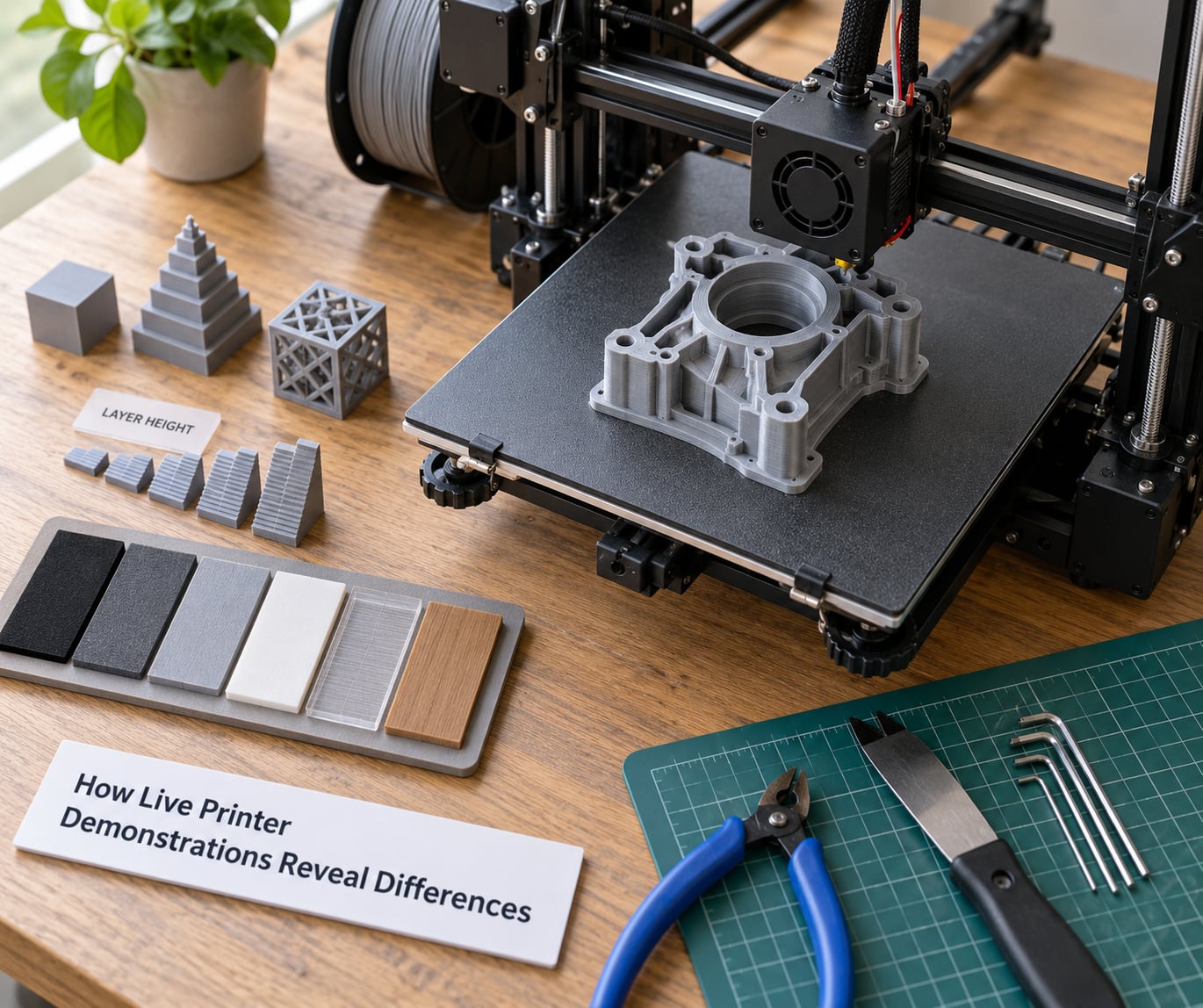
A demonstration is more revealing than a spec sheet, but only if you know what you are watching. The useful information is rarely in the finished part. It is in the setup, the monitoring, the recovery and the honesty about what the machine will not do.
Time the setup. How long from cold to first layer, and how many steps require a human? A demo that starts with a plate already loaded tells you nothing about setup time, so ask to see a build begin from the start.
Watch the first layer. Adhesion problems, incorrect flow and dirty plates all announce themselves there, and experienced staff will know why they use the preparation they use.
Look at support strategy and removal. Fine detail is easy to print and awkward to free. Ask whether the supports shown came off by hand, and how long that took.
Listen. Printers vary a lot in how much noise they make, and a machine that is loud enough to make conversation impossible changes what you can run in a shared space.
Ask what happens when a print fails at hour eleven. Remote monitoring, resume capability and how the machine communicates a problem tell you more about production suitability than peak speed does.
The biggest gap between a demonstration and a production cycle is duration. Nobody prints a four-hour job live in a booth. Ask instead for a full cycle: modelling, slicing, printing, post-processing, inspection and delivery, and how long each step takes in volume.
Which Talks and Workshops Are Worth Attending
Pick sessions by your role and by the problem you are currently stuck on, not by the speaker’s reputation. A talk aimed at design engineers has little to offer you if your problem is choosing between two desktop machines for a classroom.
If you are new to the field, start with an orientation or fundamentals session. These cover what the processes can and cannot do, which is the knowledge that stops expensive mistakes later.
Design and engineering audiences get the most from talks on design for additive manufacturing, topology optimisation, supports and overhang strategy, lattice design, and tolerance decisions. Materials sessions are worth attending even if you never buy from that supplier, because material behaviour explains most print failures.
Aerospace, defence, automotive, medical and dental applications each have their own session block. If you work in one of those sectors, that block is the reason to attend, and it is usually where the most concrete case studies appear, with real numbers on cost, cycle time and certification.
Software, post-processing, qualification and standards sessions are less glamorous and frequently more useful than the headline keynotes. Suppliers post-process every part they sell, so a good post-processing talk tells you what your finished parts will actually look like.
Business case studies suit people evaluating a purchase. They tend to be more honest about cost and payback than keynote addresses, and attendees tend to ask good questions in the session afterwards.
How Useful Are Free Samples and Giveaways
Expect printed parts, filament and resin samples, material swatches, coupons and a great deal of technical literature. Taking them is fine and often genuinely useful, particularly the swatches, which tell you more about surface finish and colour than a screen does.
Understand what a sample is and is not. A coupon or a sample filament length shows you how material feels and looks. It does not confirm a specification, a strength figure or a print quality claim for your machine, because the settings that produced it may not be settings you can reproduce.
Discounts and on-the-spot offers are worth reading carefully. Some are genuine and time-limited; some are conditional on a conversation you do not want to have. Read the terms, take the coupon if the offer is real, and know that a heavily discounted machine may arrive with support and materials priced differently later.
Free printed gifts are usually cheap and often produced on the booth’s own machine, which is itself useful information. Pick one up, turn it over and see the layer lines. It is free information about how that machine finishes a part.
How to Get Value from Networking at an Expo
The most useful conversations usually happen away from the booth desk: in the aisle, at a coffee point, in a session corridor, or during an evening event. Booth staff have a pitch and a queue. The same person standing in the aisle, ten minutes later, has time for a real answer.
Be specific about who you are and why you are asking. “I run a two-person prototyping shop and I print mostly 1.5 mm layer height” gets a better conversation than a general introduction, because it lets the other person give you an answer that fits your setup.
Qualify what you hear. A vendor with a clear service bureau, named customers in your sector and a printed data sheet on tolerance is a different proposition from one who talks only about the future. Ask who their customers are in your industry and whether you can speak to one.
Record what you need immediately, while the detail is fresh: the name, the company, the email, the specific question you asked and the answer you were given. A photo of the card plus one line of notes is worth more than a folder of forty contacts you cannot sort later.
Ask for a second conversation rather than a sale. “Could we book a call in two weeks to go through the numbers properly” is easier for both of you than a negotiation across a busy stand.
What to Bring and What to Skip
A show day is many hours on your feet in a large building. Comfortable shoes matter more than anything else in your bag.
- The event schedule, printed or on your phone, with your two priority sessions noted
- Business cards, or a card with your name, email and company if you do not use them
- A portable charger and a cable, since your phone will be your map, notes and camera all day
- A notebook, or a note app that works offline
- A refillable water bottle, where venue rules allow one
- Any safety gear the event specifies for labs or live equipment areas
- A small bag for the literature you will be handed whether you want it or not
Bring a printed part you have made if your work relates to what you are shopping for. Handling a real part from a real workflow changes the conversation, and it gives you a reference point when two vendors describe the same application.
Skip the laptop unless you have an appointment that needs it. A shoulder bag with a heavy machine in it gets tiring, and a laptop in a hall is an invitation to be interrupted. Skip loose filament samples you cannot keep at temperature, bulky props that slow you down, and any expectation that you will carry home a printer.
How to Plan a One-Day Expo Schedule
Arrive early on the first day. Registration is usually open before the exhibition, the hall is quiet, and staff have time to talk properly. Walking the floor before the crowds arrive also gives you a map you can actually read, instead of a map you unfolded in a crowd.
A workable day looks like this:
- Pick up your badge, take the floor map, and mark your six to ten must-see booths
- Walk the hall once end to end without stopping, so you learn the layout
- Start at your priority booths while demo queues are short
- Attend one or two scheduled demonstrations rather than three
- Break for food and a sit-down before the afternoon crowd
- Join your priority session, even if a booth appointment slips
- Reserve the last hour for the conversations you want to have properly
- Collect notes and business cards before you leave the hall
Adjust the priorities to your role. Makers want live desktop demos, hands-on areas and material tables, and should ignore most of the conference programme. Designers care about workflow software and case studies. Engineers want machine specifications, metrology and post-processing. Manufacturing and production buyers should prioritise service bureaus and case studies with real cost data, and skip the consumer product stands.
If you only have half a day, choose one hall, one session and one category of supplier. A focused half day beats a rushed full day, and you will still see something useful.
How to Compare Options After the Expo
Comparison is much easier on the train home than in the aisle, but only if you captured comparable notes. Use the same criteria for every booth so the entries stack up: application, material, machine class, operating cost, support structure, software, delivery and any testing you would need.
Turn notes into three columns. One for what you saw, one for what a vendor promised, and one for what you still need to verify. Most purchase mistakes come from promoting a promise from the second column into the first.
Know when to request each next step. Request a printed sample when surface finish or feel matters. Request a quotation when cost matters, and ask what assumptions it depends on. Request a live demonstration at your own facility or a trial print when machine behaviour matters more than a specification. Request a technical call when the answer requires an engineer rather than a salesperson.
Follow up within two or three days, while your notes still match their memory of you. Mention the specific thing you discussed. A short, specific message gets a reply; a generic one gets filed.
Frequently Asked Questions
Do I need to buy tickets for a 3D printing expo before attending?
Usually yes, and buying online before you travel is almost always simpler. Most events sell badges through their own website, and exhibition-only access is normally cheaper than a full conference pass. Several organisers raise the price after a published cutoff, and a few sell on-site only if tickets remain. Check the registration page before booking travel, and note whether your badge includes access to the talks or only the exhibit floor.
Are live 3D printing demonstrations reliable enough to judge a machine?
Not on their own. A booth demo is staged to succeed: a part chosen to look good, settings chosen for speed, support removal finished off camera, and a short print rather than a production run. What a demo does reveal honestly is setup behaviour, first layer adhesion, monitoring, noise and how staff respond when something goes wrong. Judge machines on your own parts, your own materials and a trial, not on the booth sample.
Should makers attend a professional additive manufacturing expo?
It depends on your goal. Hobbyists usually get more from a public maker expo, where consumer machines, accessories and creators are shown and the atmosphere is easier to navigate. A professional trade show is worth it if you print for work, need production equipment, service bureaus or materials suppliers, or work in aerospace, medical, automotive or defence. Going to the professional show as a casual maker is not a waste, but it is the more expensive way to learn the basics.
How early should I arrive at a 3D printing expo?
Plan to be at the venue about an hour before the exhibition opens. Badge pickup usually starts earlier than the show floor, queues are shortest then, and exhibitors have time for a real conversation instead of a pitch between visitors. You also get to walk the hall while it is quiet enough to read the floor map. On the second and third days, arrive earlier still if your priority is watching a demo mid-run rather than catching its first launch.
Is it worth attending a 3D printing expo if I do not plan to buy equipment?
Yes, if you go with a purpose rather than drifting. Attendees who buy nothing still report value from understanding material limits, seeing full-size functional parts in person, meeting service bureaus who could print for them, and learning which suppliers are credible. Set yourself a task: learn one process you have not used, collect a set of material samples to test, or find a mentor working in your application area. Pure wandering is what makes a show feel like a wasted day.
Can I test-print or use filament at a 3D printing expo?
Often yes, but in specific areas rather than anywhere. Hands-on zones, workshops and maker stages usually have machines set up for visitors, and some require you to book a slot or attend a short safety briefing first. Workshop materials are supplied, so bring your own file only if the organisers confirm you can use it. Never handle filament, resin or powder outside a designated area, and follow the rules for resin printing, gloves and ventilation every time.
What to Do First When You Arrive
Before anything else, save the floor map to your phone. Then pick two sessions, set reminders for them, and write down one machine and one material you want to investigate properly.
Set a single goal for networking before the day starts, such as three suppliers you want to speak to properly or two engineers working in your application area. A goal that specific turns a crowded hall into a manageable errand.
That is the whole method behind knowing what to expect at a 3D printing expo: go with two priorities instead of a wish to see everything, spend your time talking to the people running the machines, and write down what you learned before you walk out. Do those three things and you will leave with more than a bag of brochures, whatever you came to buy.